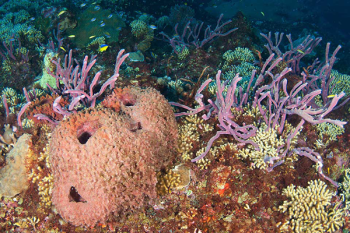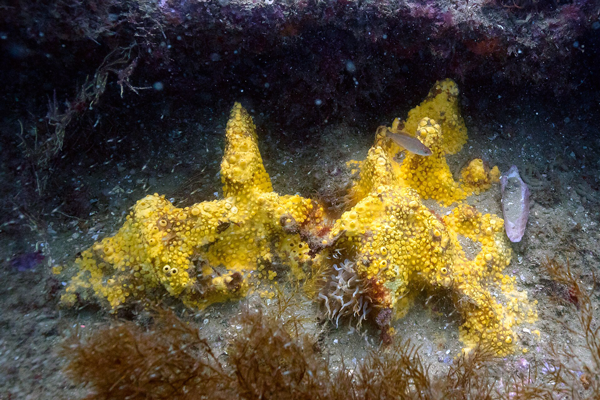
Despite their name, boring sponges are anything but. The sponges get their name from how they live in their environment. They drill into calcium carbonate structures including coral, shells of molluscs, and plates of barnacles, living in coastal waters of every continent except for Antarctica.
Drilling with Etching Cells
Boring sponges drill using specialized cells, called etching cells. These cells extend long, thread-like structures that combine to form a “net” on the calcium carbonate substrate. Like the printing process they’re named after, etching cells secrete an acidic compound that dissolves the substrate. The sponge chips away small pieces over time getting rid of these chips using its internal water canal system, expelling them through the pores on its surface.
The process continues as the sponge forms tunnels within the shell or on the structure it inhabits. This is the excavation stage of a boring sponge’s life. Once a shell disintegrates from erosion, the sponge can continue to grow, covering a reef or multiple shells, up to several square feet.
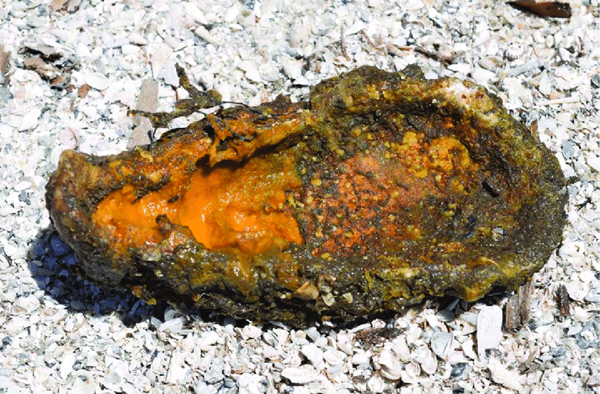
Oyster farmers consider this species a pest because it weakens the oysters’ shells and can destroy oyster reefs. The destruction of marine structures by boring sponges is called bioerosion. But there is a positive side to their work: boring sponges are ecosystem engineers, recycling calcium carbonate, making it available to other animals that can use it to build shells or skeletal structures.
Ocean Acidification
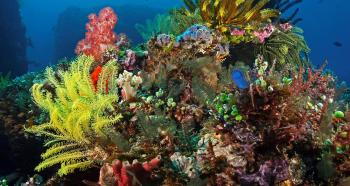
The oceans are acidifying in response to the ongoing ocean absorption of carbon dioxide from the atmosphere. This changing ocean chemistry will reverberate through every coastal and marine ecosystem. In coral reef environments boring sponges prefer more acidic waters. In fact, they have “an adaptation to increase acidity in localized areas to aid in dissolving the carbonate skeleton of stony corals or marine bivalves and gastropods.”
Increasing ocean acidification will benefit boring sponges. As acidification increases it naturally accelerates dissolution rates of the carbonate skeletons of corals making it easier for the sponges to break down corals and create new habitat faster. Although this benefits the sponges, increased bioerosion and a warming ocean will impact not only coral abundance but the entire coral reef ecosystem.