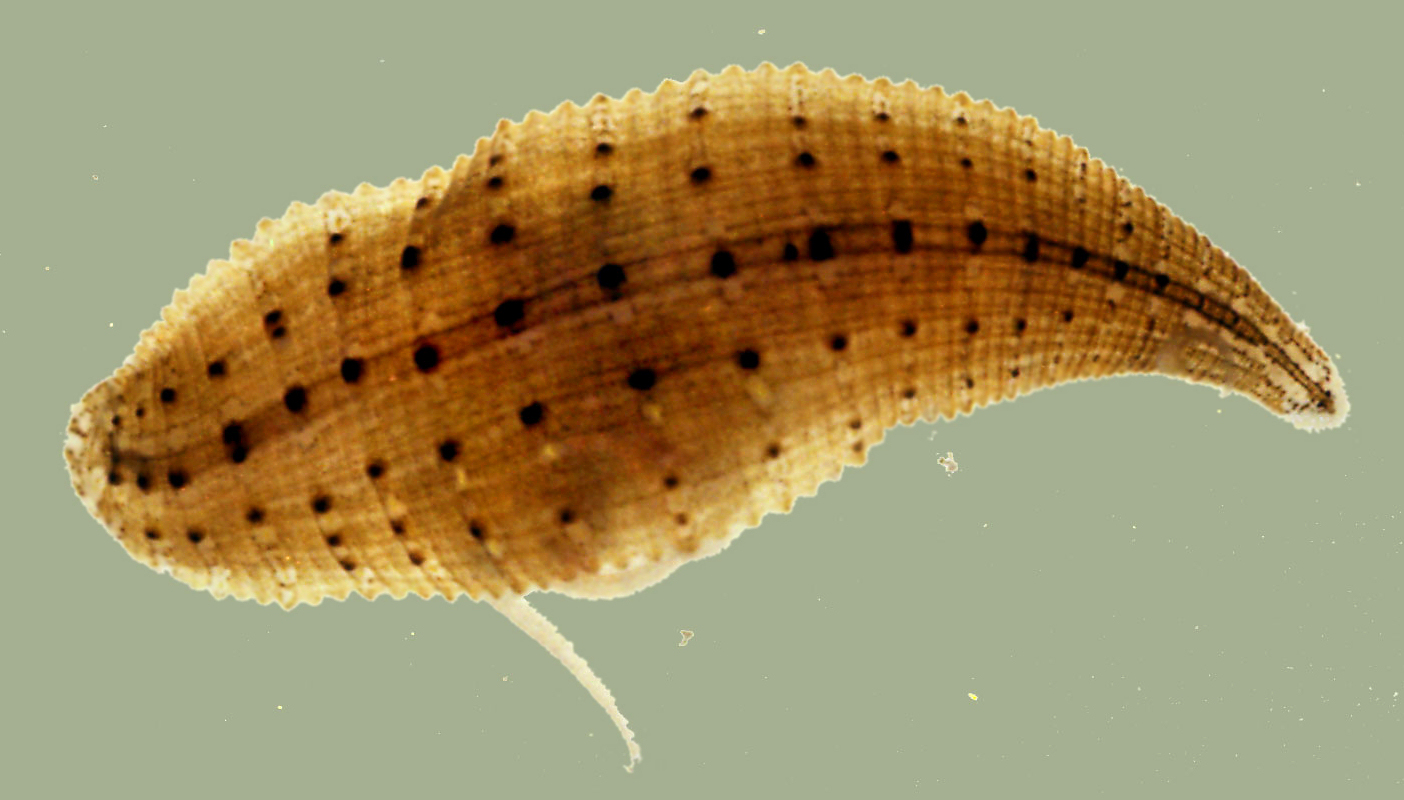
For some people, hearing the word leech sends shudders through their bodies. That’s because of the leech’s reputation as blood suckers. But not all leeches feed that way. And there’s a lot more to them than their fearsome reputation.
Most leeches are predatory, feeding on other invertebrates such as insect larvae, earthworms, snails, and other leeches. They either consume their prey whole or pierce them with specialized
The blood-sucking, parasitic leeches feed on the blood of fishes, birds, amphibians, and mammals. They are equipped with jaws and muscles that enable them to adhere to the bodies of their hosts and consume blood. The leech injects its host with a local anesthetic so the bite isn’t painful. Once their teeth are engaged, they inject strong anticoagulants. The animals whose blood the leeches consume continue to live after the leech detaches. Because of their blood-sucking characteristics, parasitic leeches have been used medicinally for centuries and are still used in medicine to clean wounds and improve circulation; these are known as medicinal leeches.
For the ultimate yuck factor, some members of one family of leeches go inside the bodies of their hosts, feeding on mucous membranes, particularly of mammals, but also amphibians.
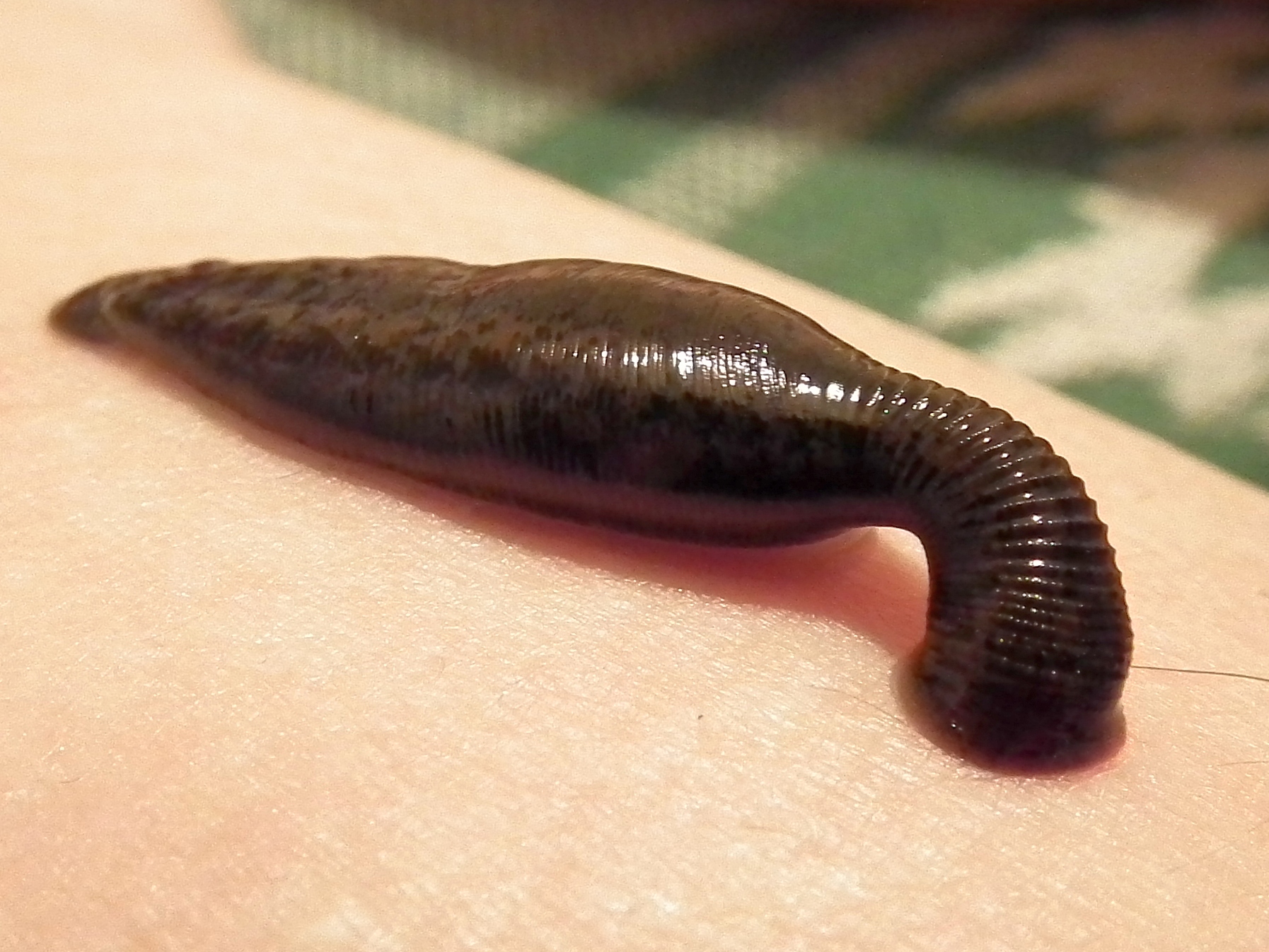
Leech Nervous System
Leeches are annelids, segmented worms like earthworms, with flattened bodies. Some researchers consider them the most extreme annelid. Unlike earthworms, they have both back and front disc-shaped suckers used for locomotion and feeding.
Brainiacs
A leech’s body is divided into 34 segments, each one of which has its own mini brain. Really, all these mini brains are nerve ganglia that work together instead of a centralized nervous system like vertebrates with one brain and spine. They also have a head brain and a tail brain, but the majority of the leech’s neurons are located in the nerve ganglia.
The majority of leeches are freshwater and most are abundant in warm, calm, shallow waters of ponds and lakes, especially in areas with a lot of vegetation and debris—a lot of cover. As described in this field guide: “Leeches usually avoid light. Some species hide under stones or under submerged logs; others live in the bottom muck; others loop among plants in gently moving waters and streams.” These leeches sense changes in water vibrations to find prey. Fish and other aquatic animals prey on leeches.
Highly Adaptable
Many leeches are very adaptable, thriving in extremes in temperature, moisture, salinity, pressure, and light. Leeches living in lakes, ponds and marshes may face extremes including a wide range of temperatures and oxygen conditions. They are also sensitive to pollutants. Because of this sensitivity, their presence in a habitat is often a sign that the water is clean and healthy and should be celebrated.
Leeches have photoreceptors for vision, chemoreceptors for sensing chemicals both in the air and water, and mechanoreceptors for sensing vibrations. All three senses are used to locate potential prey and hosts. Leeches have five pairs of non-image-forming eyes on their heads and a grid of round visual-sensing structures (called sensilla) on each of their midbody segments. Scientists have found that they detect light and dark, and are very sensitive to UV light.
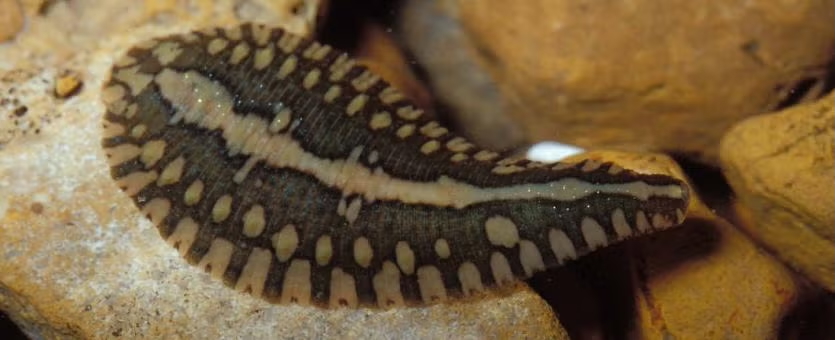
Reproduction
Like earthworms, leeches are hermaphrodites, meaning every leech is both male and female. A mating pair of leeches fertilizes each other and both produce eggs, which are enclosed in cocoons, some soft, some hard. The cocoon contains a nutrient fluid that lasts until the young hatch. The leeches place their cocoons on objects in water or just above the water line.
Habitat
There are about 700 species of leeches on every continent except Antarctica, living in terrestrial, freshwater, estuarine, and marine ecosystems. Marine leeches are primarily parasitic on fish and turtles, and there are even several examples of deep-sea leeches. And leeches have been found living deep within cave systems around the world.
A big threat to leeches is drying out, especially for those living in terrestrial habitats. To prevent this, they produce large quantities of mucus. Many of the blood-sucking species live in moist, terrestrial environments in the tropics and subtropics. They find prey by moving towards ground vibrations, changes in air currents and other sensory cues.