Look at a sea star or sea urchin and you may wonder how these creatures, and other
echinoderms, navigate their worlds since they look so unlike most animal groups.
Scientists know that the sense of touch and smell (chemoreception) guide many echinoderm behaviors. But, more than a century of research has shown that most echinoderms avoid exposure to bright light, which can trigger contracting or shelter-seeking behaviors.
So, how do these creatures sense light? Some do indeed have true eyes, but all groups of echinoderms have scattered photoreceptors on their bodies described as a ‘dermal light sense’. This type of light sensitivity without using real eyes is also called extraocular photoreception. Extraocular means having eyes (sight) outside of any eye.
Eyes
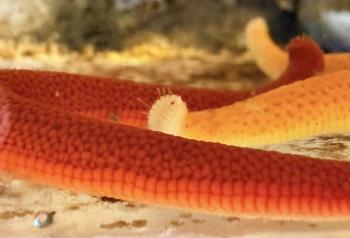
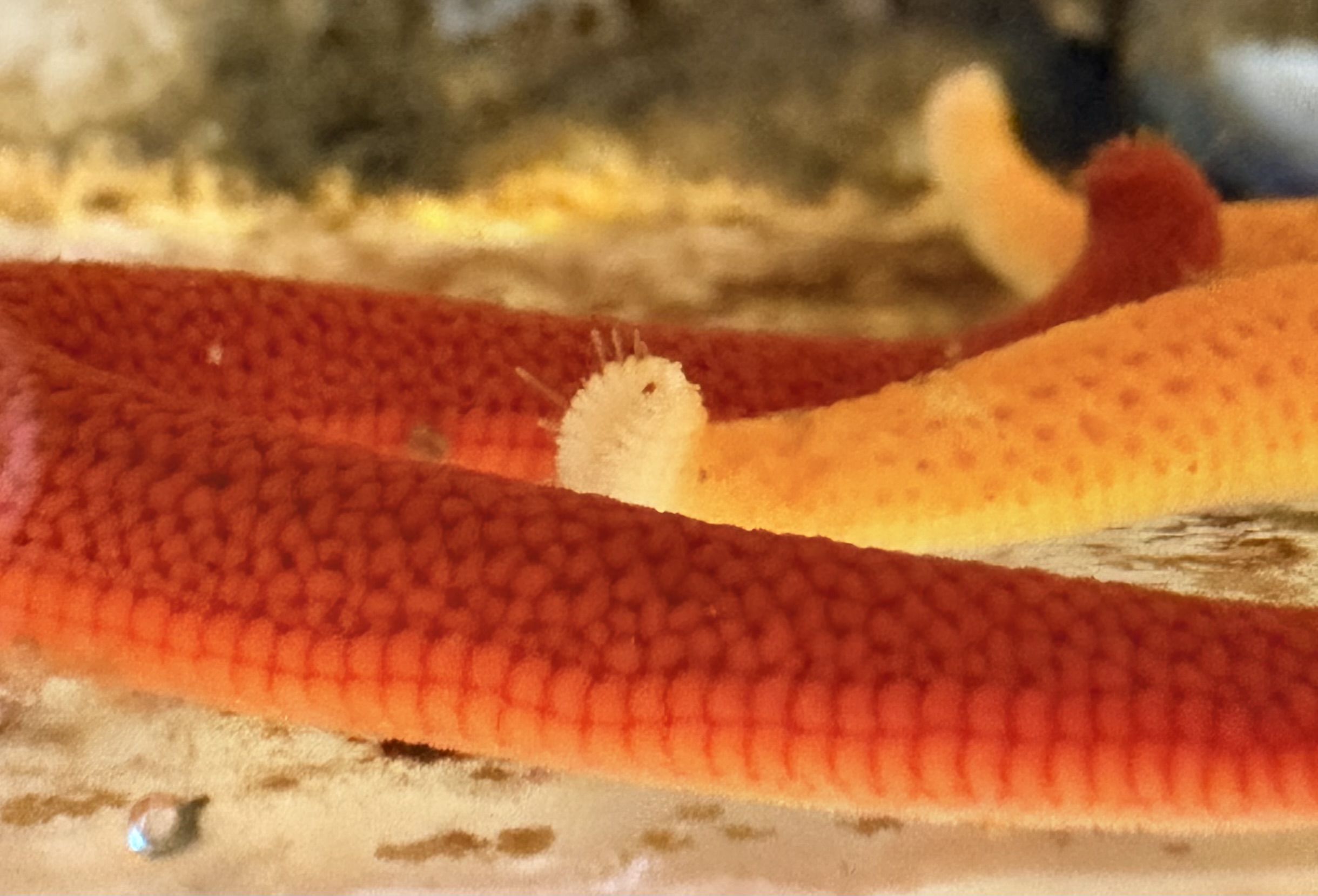
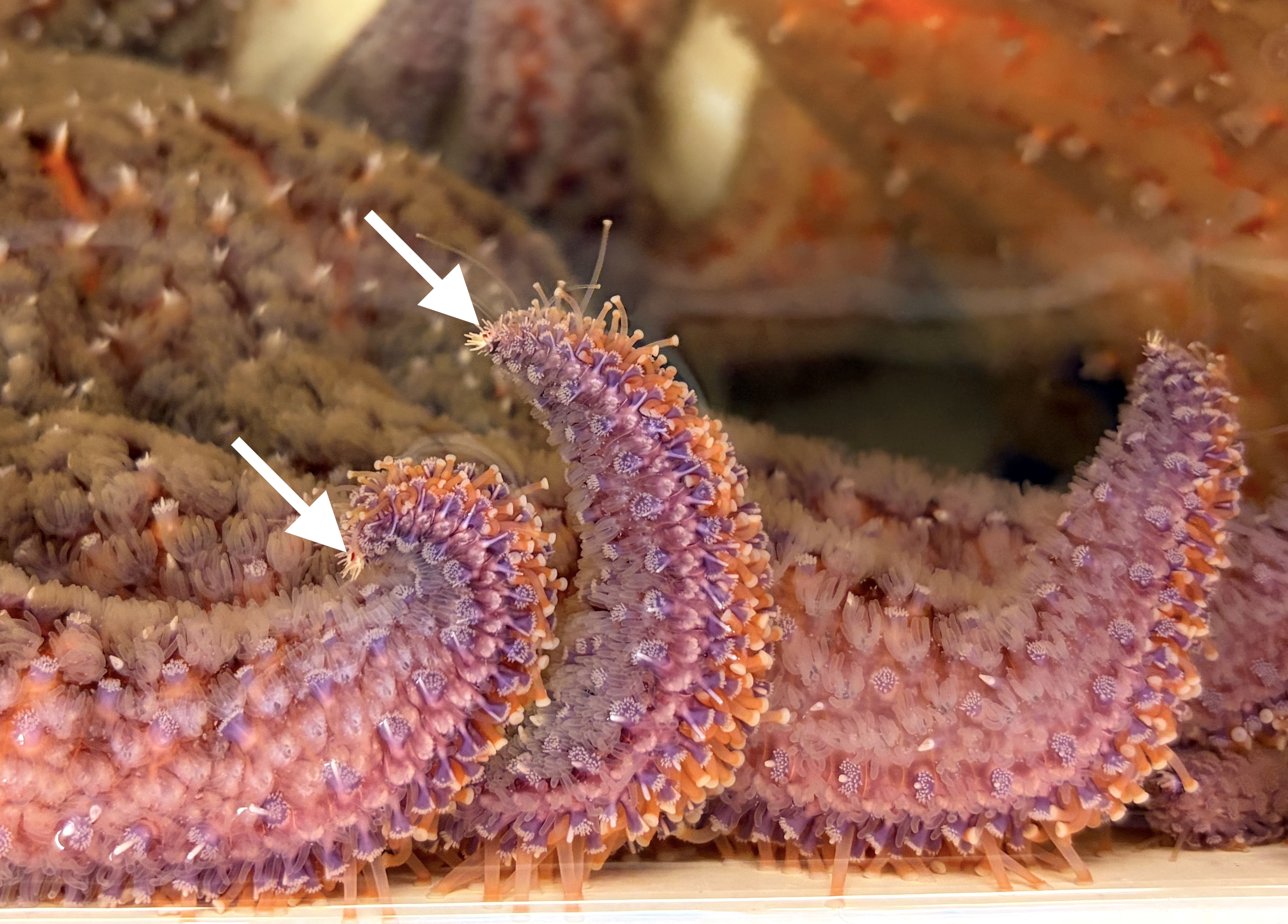
Sea stars have small true compound eyes on their arm tips, sometimes called optic cushions. They are composed of ommatidia, or clusters of photoreceptor cells, appearing as tiny red dots on the tips of the arms. The few sea stars that have been studied have true spatial vision and can perform visual navigation. Some of these tiny sea star eyes are even capable of image formation, but with very limited spatial resolution.
Finding Their Way Home
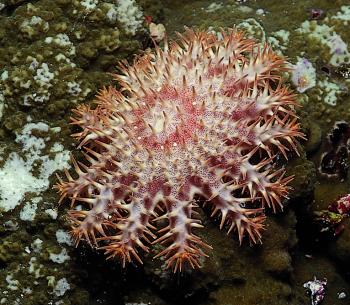
Most research has been on the Crown of Thorns, which has the most ommatidia of all the shallow-living sea stars. Scientists have tested them and found that they are able to find their way back to their home reef when removed. The researchers speculate that they are reacting to shadows cast by the reef. Other researchers showed that the Indo-Pacific sea star Linckia laevigata uses its eyes to navigate back to its home reef after being displaced.
Extraocular Vision
Extraocular vision is light sensitivity without eyes as described above. This type of scattered receptor can be either photo negative or photo positive. Of the echinoderms, researchers know that these groups have extraocular vision mediating photo-negative responses: echinoids (sea urchins, sand dollars and heart urchins); ophiuroids (brittle and basket stars), holothurians (sea cucumbers), and comatulid crinoids (feather stars). Most of the research has been done on sea urchins and brittle stars, which have photoreceptors scattered around their bodies. On the other hand, Sea stars have both photo-negative and photo-positive photoreceptors.
For those species that have both types of vision (eye and extraocular), scientists presume that the systems interact. In addition, scientists have proposed an optical role for skeletal structures in both sea urchins and brittle stars. Currently there is little evidence that the skeleton guides or focuses light, but the skeleton could possibly have a role as yet known—more research is needed.
Opsins
Opsins are the light-sensitive proteins that absorb light from the environment, a step in the conversion of light into an electrochemical signal that enables vision. Sea stars are color blind and their vision seems to be based on just one opsin in their eyes.
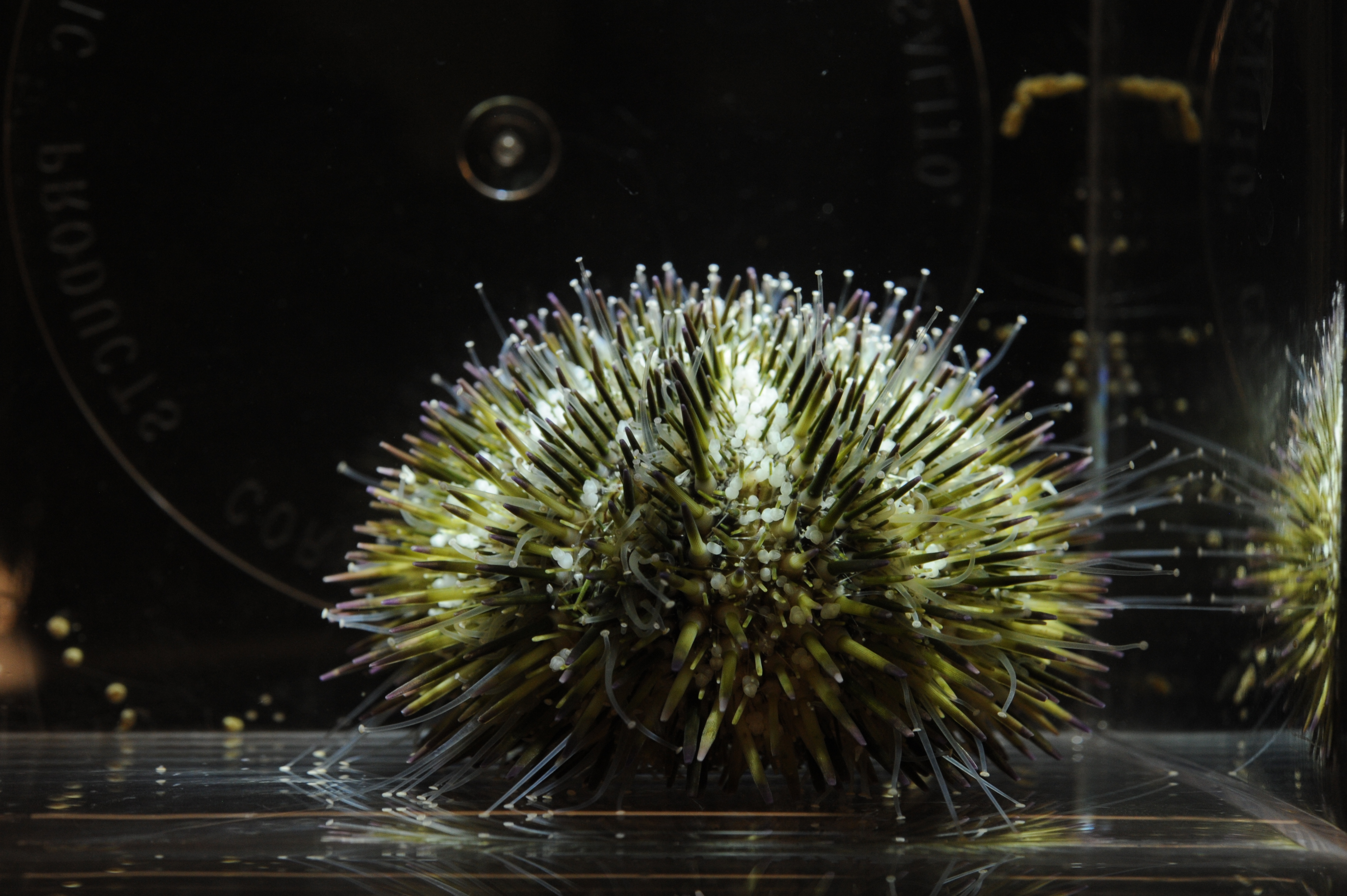
Brittle stars and sea urchins have light-sensitive cells with opsins scattered throughout their bodies, so that their entire body acts like one decentralized eye. Researchers have shown that they have spatial vision, but at low resolution. Two opsins are found throughout the body surface of sea urchins: in the tube feet, spines, skin cells, and nerve cord. Scientists have found eight genes for opsins in in the sea urchin S. purpuratus.
In brittle stars one opsin is mostly in the spines and a separate one is in the tube feet and nerve cord. In the brittle star Ophiocoma scientists have found numerous opsin-containing photoreceptors. https://www.sciencedirect.com/science/article/pii/S096098221931512X
The Deep
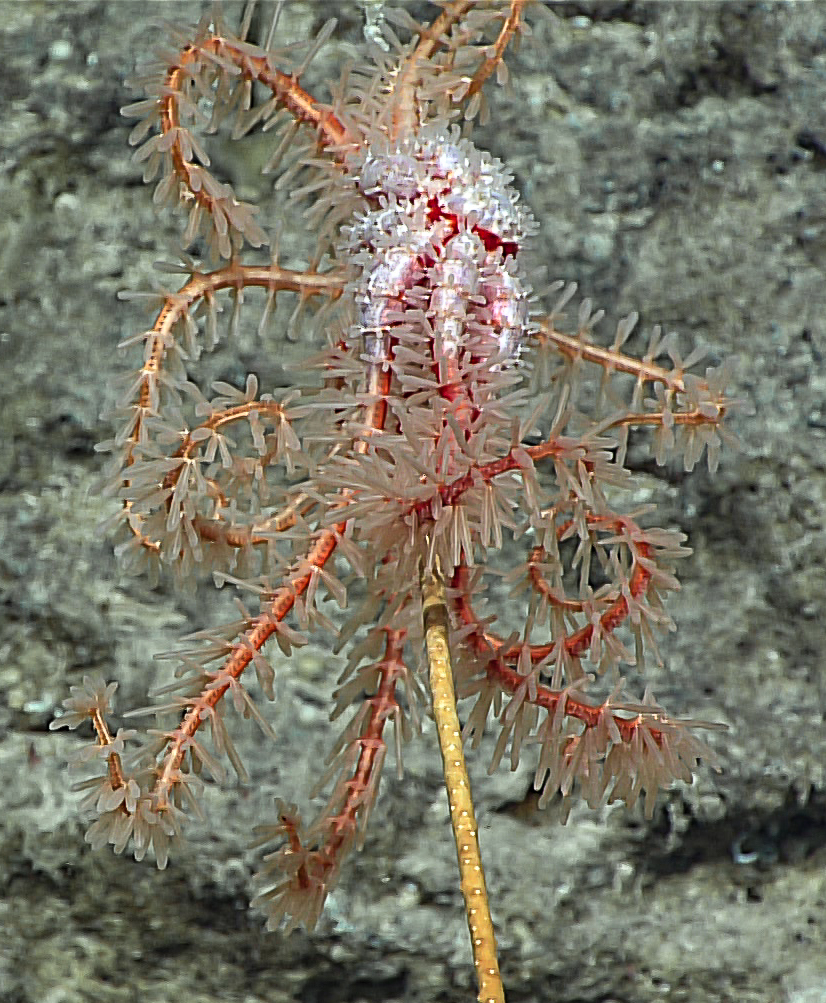
Deep-sea sea stars have denser ommatidia than shallow-living species. One species, Brisingaster robillardi, which lives at 100 to 1,220 meters (approximately 328 to 4,000 feet) has more than 600 ommatidia per eye, which is the highest number of ommatidia found in any sea star eye so far. For comparison, dragonflies have up to 30,000 ommatidia in a single eye. Researchers found that the sea star’s eyes are adapted for spatial resolution over sensitivity. This group of sea stars, the brisingids, is bioluminescent. This fact, along with their relatively high spatial resolution suggests these sea stars may use their eyes to support visually intraspecific communication based on bioluminescent signals.