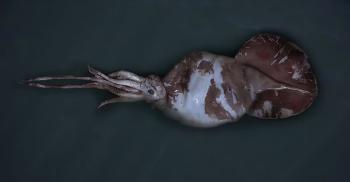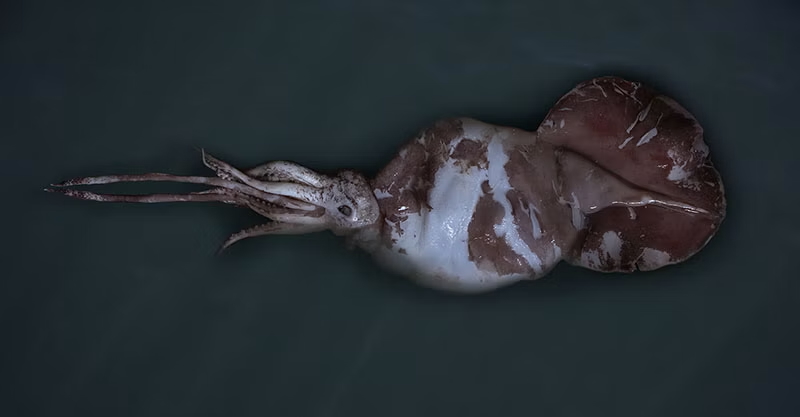
The colossal squid (Mesonychoteuthis hamiltoni) is a very large squid, as its name implies. How big? The creature can reach a total length of about 5 meters (4.8 feet). It weighs more than the giant squid – 400-500 kilograms (882-1100 pounds) – making it the heaviest known invertebrate. But the giant squid is longer. The colossal is found only in the Antarctic region where it lives in the deep ocean, in the mesopelagic and bathypelagic zones, down to 2,000 meters (6,562 feet).
No adult colossal squid has ever been seen alive in the deep sea. They have only been caught twice. Both times by the same fisherman. Our Featured Scientist was lucky enough to be able to examen and dissect one of the specimens and talk about how exciting it is to have a preserved one in the Te Papa Museum in New Zealand for the general public to see. Watch here.
The Better to See You With
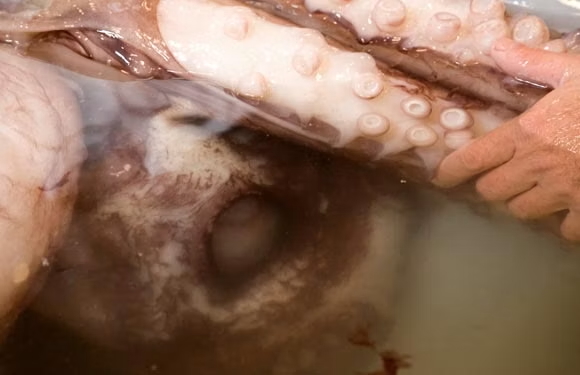
The colossal squid has very big eyes—the largest animal eyes ever studied. The eyes are 27 centimeters across, about the size of a soccer ball. Except for the size, the eyes are similar to ours with a lens. With these huge eyes this squid has very good vision in the dark ocean they inhabit.
Like many squid, the colossal has light organs (also called photophores), which are used like headlights, one on each eyeball. The light from the photophores is produced by a chemical reaction involving bacteria, and is a type of bioluminescence that stays on all the time. Each light organ is a vertical band behind the eyeball, beside the outer edge of the lens. Many deep-sea animals show this kind of bioluminescence . These organs provide enough light for the squid, with its huge eyes, to see well enough in the dark to catch prey.
A Beak for a Mouth
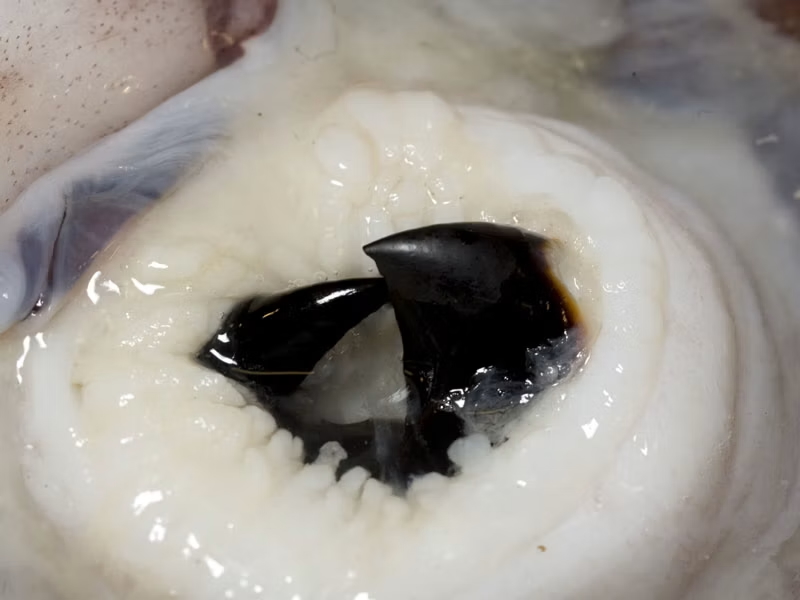
Like all squid, the colossal squid has a beak, which is essentially its mouth. The size of a squid beak is related to the size of the animal so these large squid have large beaks. The beak is hard, made of chitin, the same as the exoskeletons of crustaceans and insects. Like a bird, the squid has an upper and lower beak, but the lower beak overlaps the upper. Once a squid has caught its prey with its hooked tentacles, it uses the beak to eat it in pieces. The bits go down its narrow esophagus, which leads to the digestive track. The colossal squid is a supreme predator, preying on toothfish, smaller deep-sea fish and other squid.
Reproduction
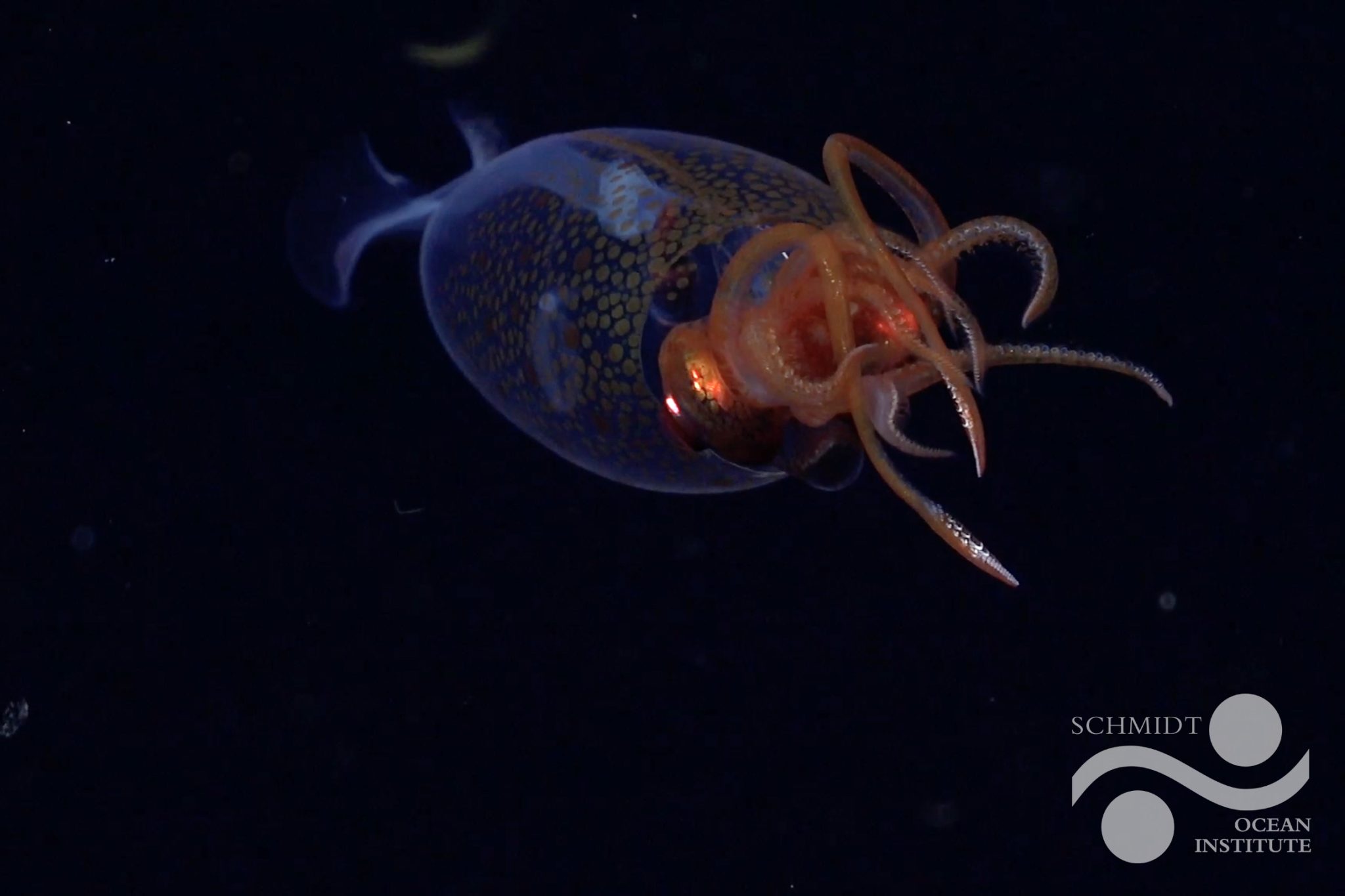
When they are born, colossal squid probably are tiny and transparent, not more than 2-3mm (.11 inches) like their relatives. Colossal squid eggs have never been seen. But a juvenile was seen for the first time last year. It looks very similar to its smaller transparent glass squid relatives.
Adult colossal squid live in the deep, where it’s common for animals to get very large as an evolutionary strategy, called Bathyal Gigantism. They are much larger than their relatives living in shallower waters. Animals that get that big have fewer predators. Only sperm whales and sleeper sharks seem to prey on the colossal squid.
Climate Change
Scientists are curious about how lower pH (ocean acidification) might impact colossal squid. They live in the Southern Ocean, where the waters are cold and cold waters take up carbon dioxide at a faster rate than warmer water. So, the effects of ocean acidification will be felt there first. Researchers are taking some of the squid tissue from the one at Te Papa Museum to see if there’s any dissolving of the hard parts: the beak and sucker rings are made of chitin which are fairly resistant to acidification. But they will also look at calcium carbonate structures like the ear bones, which are much more susceptible to acidification.