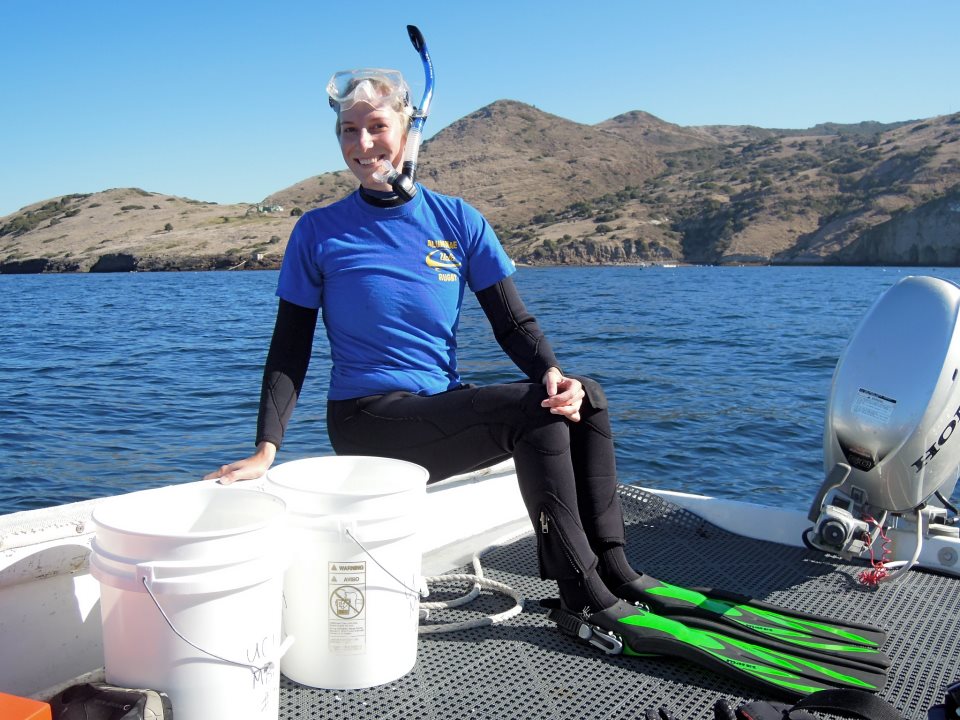
Living the Dream of a Marine Biologist
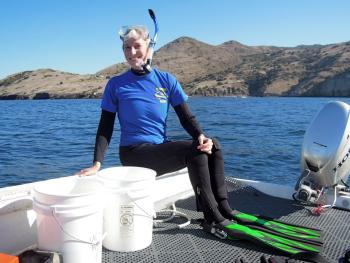
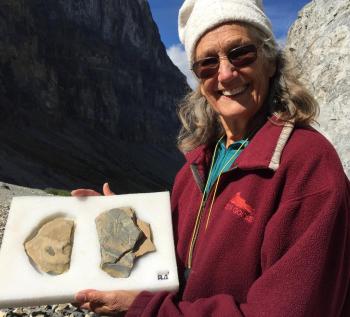
Julia was always interested in science and nature. Her family moved around a bit growing up and finally landed in Baltimore, where she often went to the National Aquarium to hang-out. Drawn to nature, Julia went to UCLA for college she majored in Biology where she “stumbled” on Marine Biology. “It had fewer chemistry requirements, so why not major in that? And it sounded like everyone’s dream to be a marine biologist,” said Julia.
While in college, Julia spent a term at the Bodega Bay Marine Lab. She loved being in the intertidal field. Julia didn’t graduate from college thinking about grad school; she traveled and worked all kinds of jobs. Then a former UCLA professor emailed and asked Julia to be a Teaching Assistant in a marine invertebrate class. This opportunity put her back in the university environment where professors encouraged her to get an advanced degree.
The Vision of a Sea Urchin
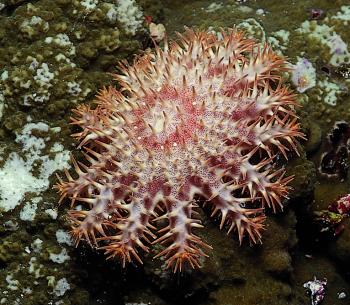
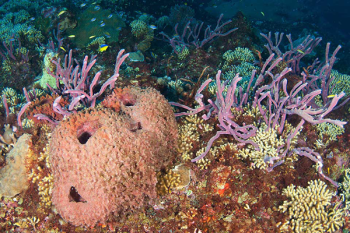
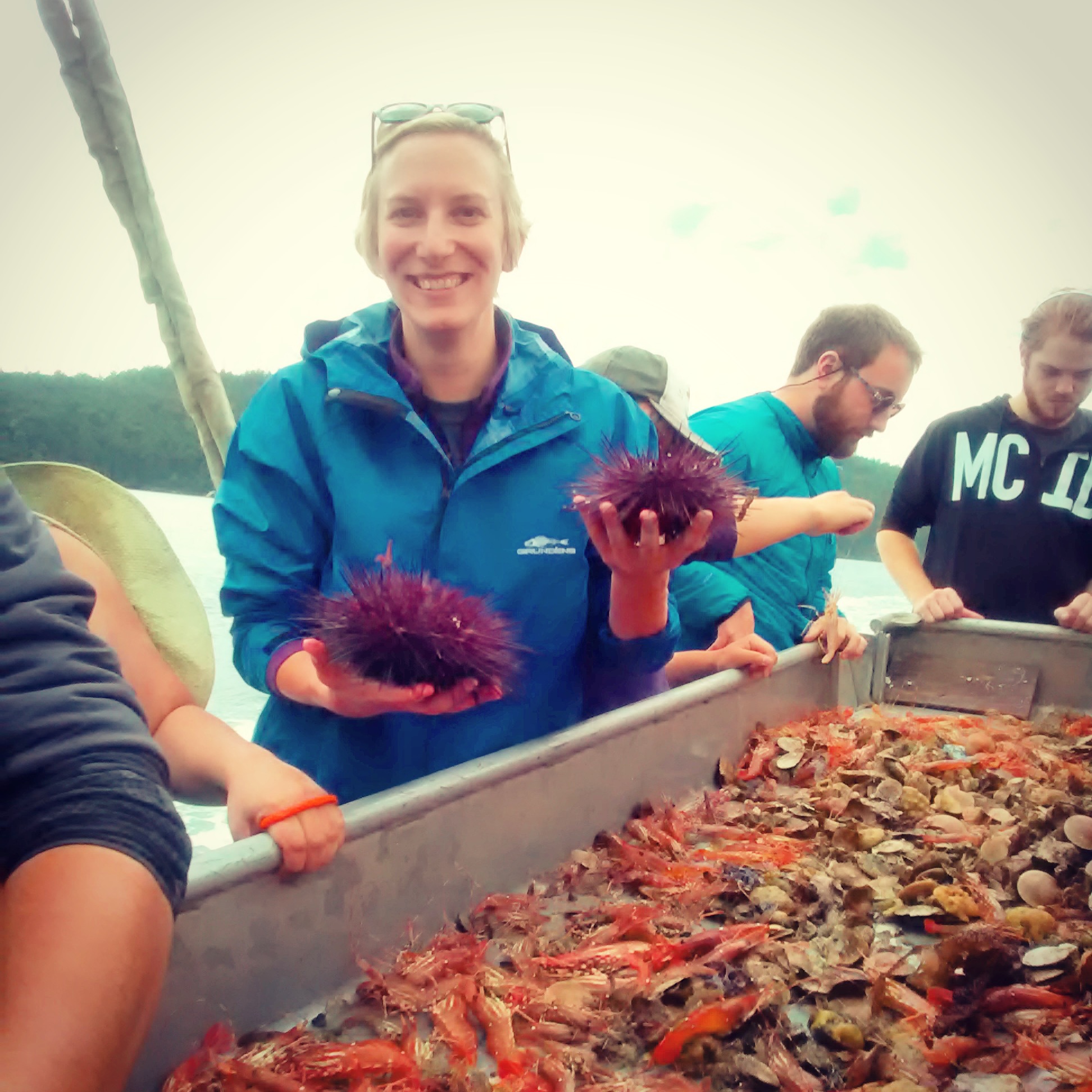
Thinking about a project for her Master’s, Julia realized she was very curious about sea urchin vision and wanted to investigate how the animals saw their world. After delving deeper into Echinoderms, she was hooked on their strangeness. In doing her research, Julia saw a scientific paper on sea star vision and realized that visual ecology/sensory biology was a field of study. She discovered that researchers could ask at an individual animal level, “can you see color? Can you navigate?” Julia did her MS in sea urchin vision and her PhD researching vison and behavior in sea urchins and brittle stars.
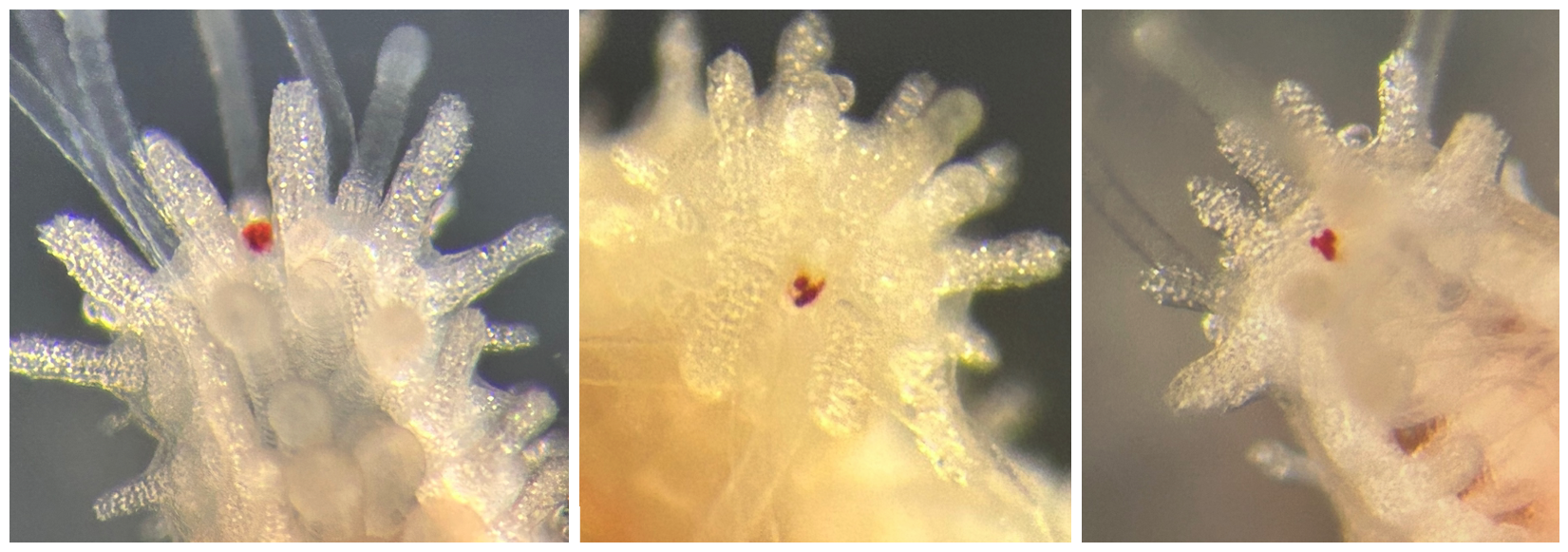
Leptasterias juvenile eyes
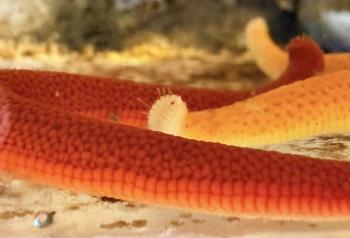
Julia is currently studying sea star vision, specifically eye growth from juvenile to adult. She wants to understand the life cycle of vision from non-sight to sight. She tests animals to see behavioral responses.
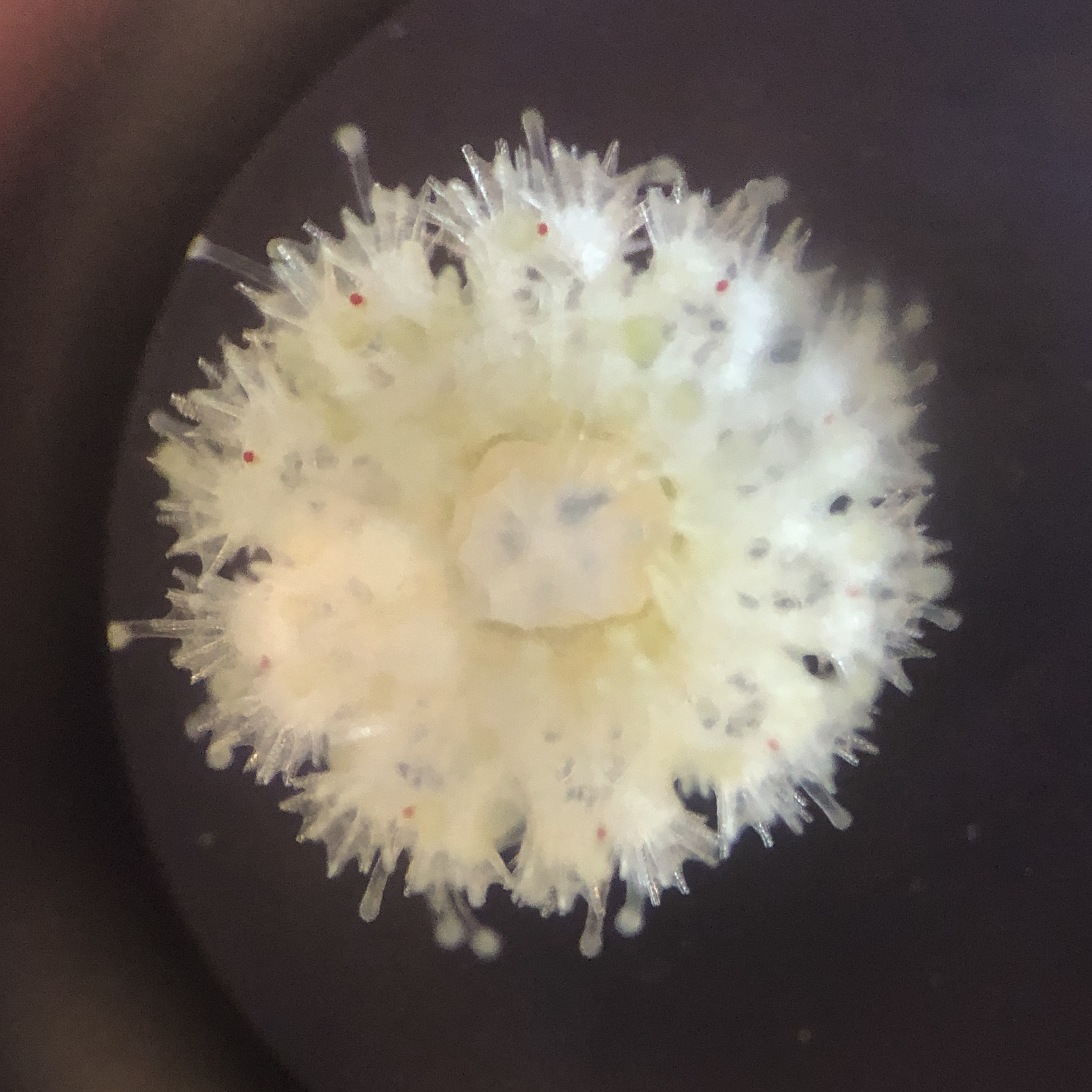
In addition to the behavioral testing, Julia looks at the structure of the eyes at different life stages. She does a 3-D scan to see the size and structure of the ommatidia. Ommatidium works like a separate, mini-eye pointing in a slightly different direction. In sea stars the ommatidia are the same size but the animal will add more as they grow.
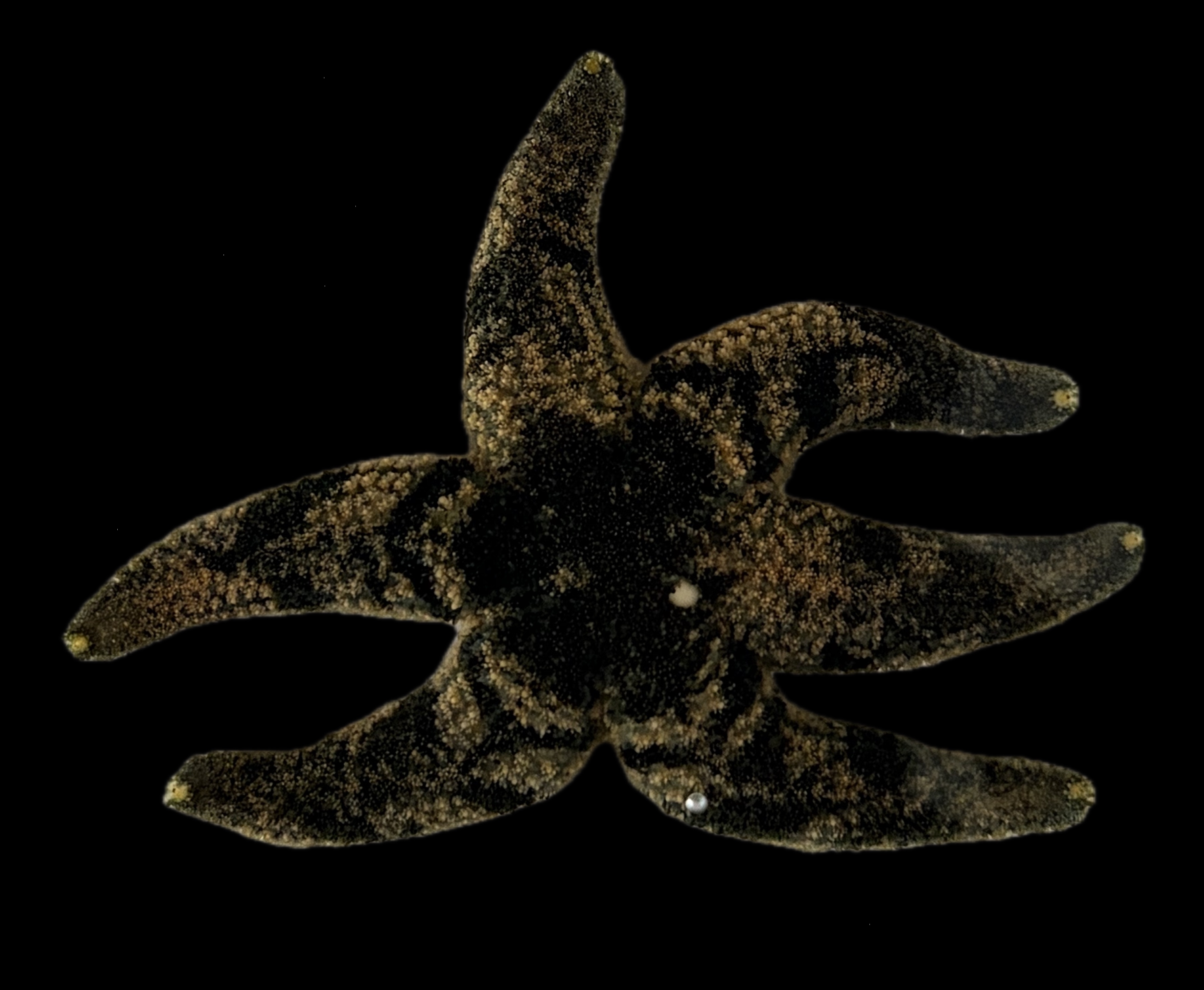
More Arms = More Eyes
Julia is excited to test as many species as possible to look at both behavior and the optics of vision. She hopes to work with the sunflower star, Pycnopodia. They have many arms – up to25 – but start with five. These sea stars add eyes as they add arms. How do they integrate all the images? Echinoderms have a decentralized nervous system like decision-making by committee. A system like this is resilient damage control. For example, most sea stars can drop arms and regrow new ones with eyes.
What’s the Biggest Threat? Climate change
The biggest impact on echinoderms on the West Coast has been sea star wasting disease, which is exacerbated by elevated water temperatures. Scientists have predicted one of the largest El Niño events coming up this winter. What will that mean for sea stars? The disease is caused by a bacterium that likely needs warm water for an outbreak. But that’s only one piece of the climate change puzzle. Ocean acidification and changing food webs are also impacting ocean animals in diverse ways.
Spend More Time Outside
Julia advises students to spend time outside. Watch whatever you can, even slow-moving animals like insects. Using iNaturalist to identify organisms you can practice observational skills and learn about your local flora and fauna.
Julia also believes it’s important to cultivate a lot of interests including art and humanities. There are rewards in all intellectual and artistic abilities. Julia likes to draw and sketch, loves music (piano and guitar), and architecture. She got into photography, where you must learn how light works in the camera, which is like how eyes work. And, of course, a scientist needs to be a good writer to communicate their work to other scientists as well as the public.