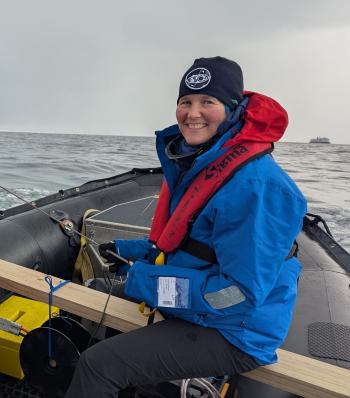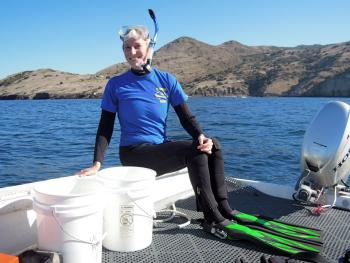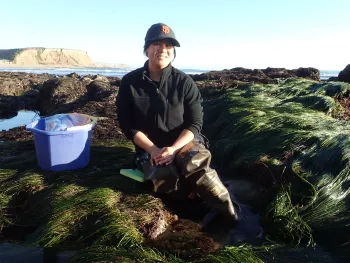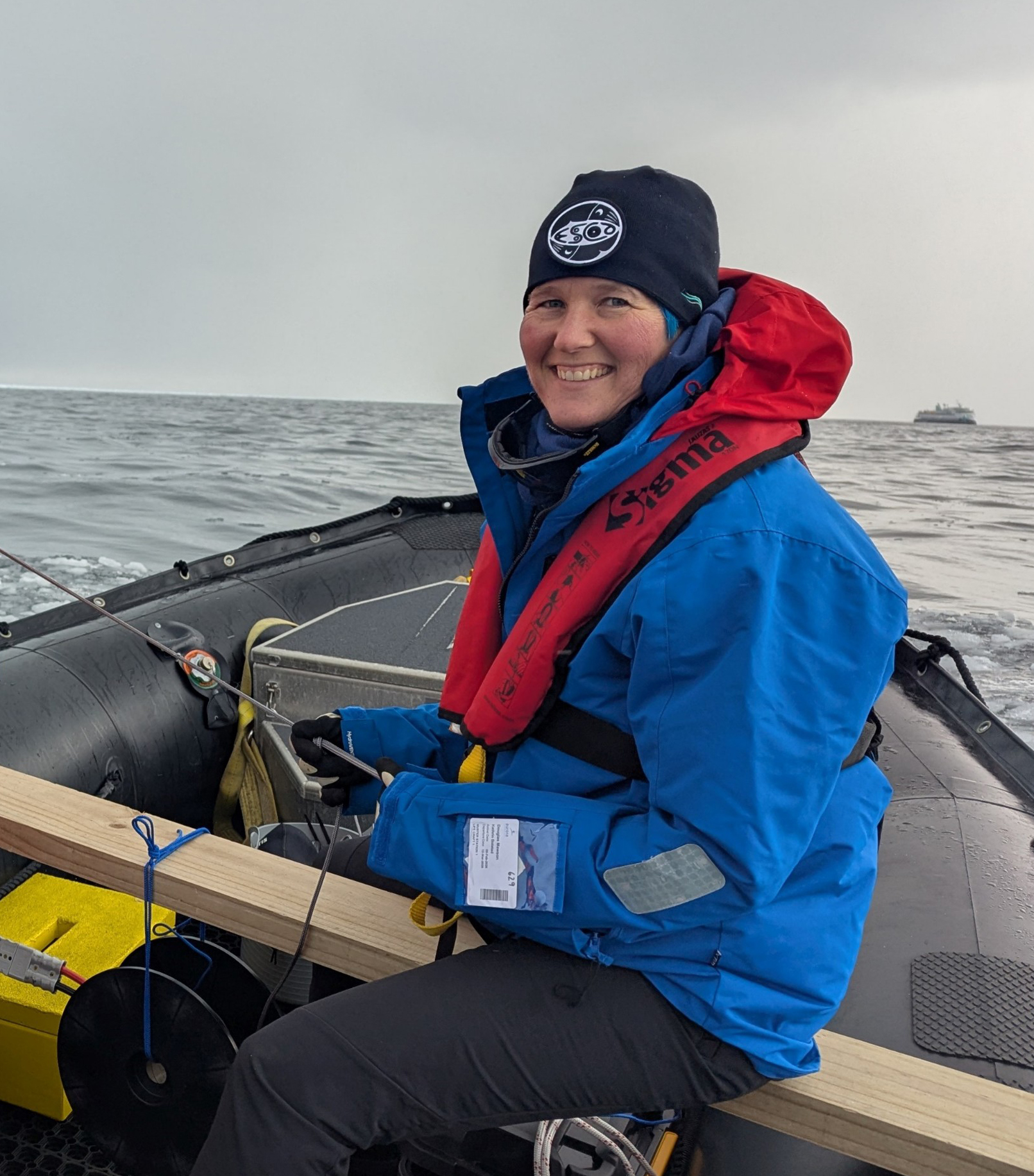
Growing up in Minnesota, Kat was drawn to water at an early age, playing in lakes, catching crayfish. When the family moved to DC, she attended the Thomas Jefferson High School for Science & Technology where she did a marine biology class project on angler fish. And then at the end of high school working as an intern at the Smithsonian, she described two new isopod species. Her career as a marine biologist was off to an early start. In college she shifted to an environmental science focus.
For the love of cephalopods
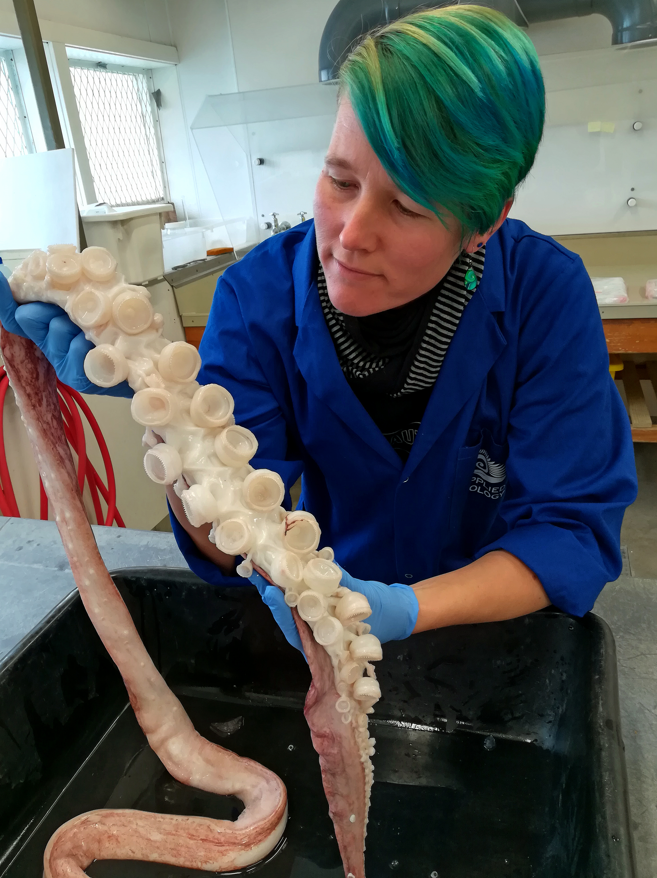
It was as a volunteer at the New England Aquarium where Kat fell deeply in love with the giant pacific octopus. And that was it for cephalopods: they became Kat’s passion.
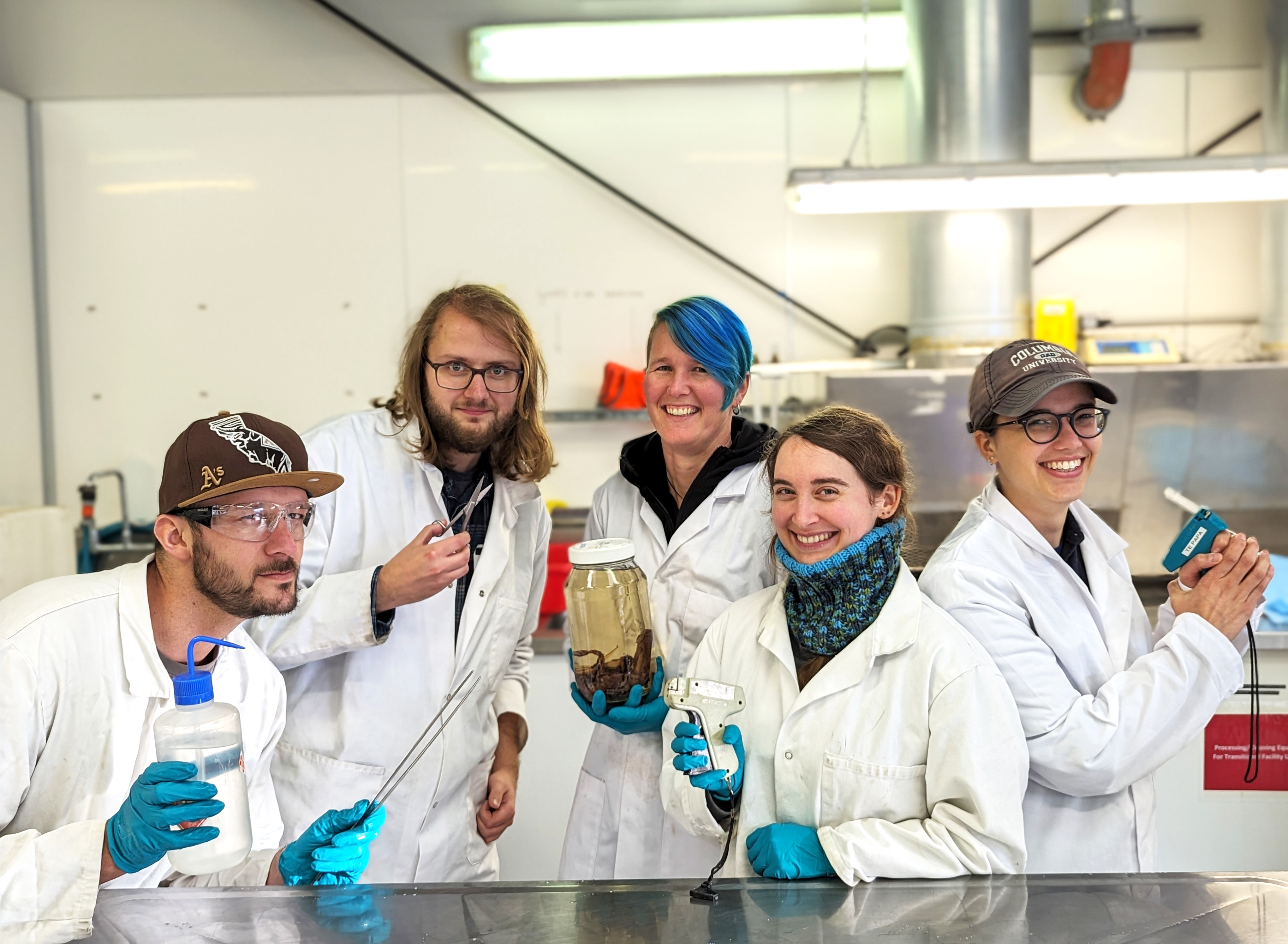
New Zealand Cephalopod Center
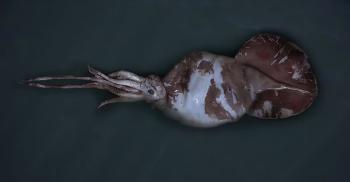
As an undergraduate Kat spent a semester in New Zealand and fell in love with that country. She finally made it back for a PhD at Auckland University of Technology. And after twenty years Kat is still running her AUT Squid Squad research group, focusing on New Zealand squid in the global context. And New Zealand is certainly the place to be for squid with over 90 species. In fact, New Zealand is a hot spot for cephalopods in general with over 160 species.
Kat has been lucky to work with many different groups and to go on voyages around the world in search of cephalopods. She and her students are currently busy creating a new website that is all about the cephalopods of the world. Each species will have its own web page. Hopefully ‘Cephref.org’ will be up and running soon.
Kat’s MBARI Project
Photographing Cephalopods
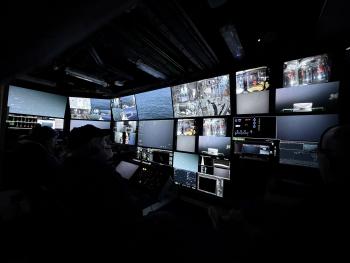
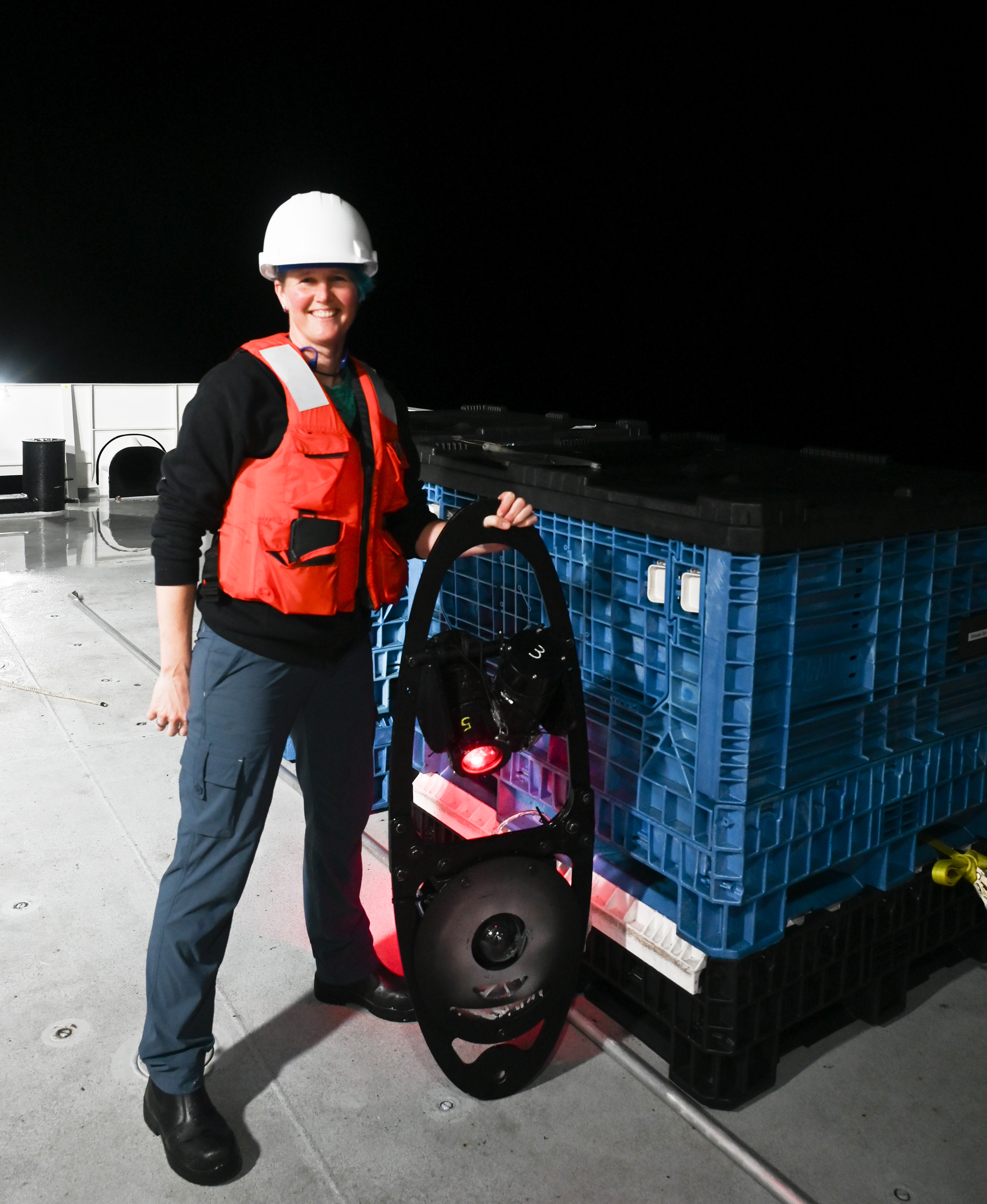
On our MBARI cruise Kat was working on her deep-sea camera project called ESCA (Electronic Signaling Cephalopod Attractor). And that is just was this device is for: to attract and photograph cephalopods where they live in the deep ocean. The device has a far-red light because cephalopods can’t see that wavelength. And the camera is low light sensitive in order to photograph anything attracted to the lure, which uses a range of light signals that circle around to attract the animals. In this cruise Kat wasn’t able to photograph any cephalopods, but she was able to adjust the lights to work better. Doing science in the deep sea takes a lot of trial-and-error adjustments to get experiments to work.
On the cruise, Kat stayed up to all hours of the night photographing and preserving specimens for a range of projects. She and her students want to obtain the genome for as many deep-sea animals as possible.
Science Communication
Kat is a great teacher and does lots of outreach to the public through Podcasts like the Deep-sea Podcast. She talks about the camera project in this episode. This episode is about the colossal squid. Kat also produced YouTube videos. She was one of three scientists to be the first to dive in the Antarctic to observe deep sea cephalopods, resulting in the BBC David Attenborough documentary Deep Ocean: Giants of the Antarctic Deep.
Kat is truly passionate about cephalopods. She believes the ocean is full of wonders and mysteries. And she should know, because she has spent a lifetime in and on the ocean in search of her wonderous cephalopods. She says to the next generation, “Find what you love.” She sure did.