Human Activity and Ocean Acidification
The ocean is becoming more acidic due to climate change. It’s acidifying in response to the ongoing ocean absorption of excess carbon from the atmosphere, a result of human activities.
Since the Industrial Revolution the pH (the measure used to indicate the acidity of water) of surface ocean waters has fallen by 0.1 pH units. Because the pH scale is logarithmic, this change represents approximately a 30 percent increase in acidity. Today in 2026, the pH level of the oceans is around 8.1. Researchers predict it to fall to around 7.8 by the year 2100, which would mean a sharp increase in acidification.
The impact of acidification is already being felt in some places and on some creatures. What the future means for specific animals is a topic of laboratory research around the world. Initially climate change was thought to be good for cephalopods because they grow fast and scientists thought they could adapt.
But acid water erodes calcium carbonate in the shells of marine animals. Researchers found that acidification impacts aragonite (a form of calcium carbonate) in statoliths of squid, critical for balance and detecting movement: they had significantly reduced surface area and were abnormally shaped in some squid larvae.
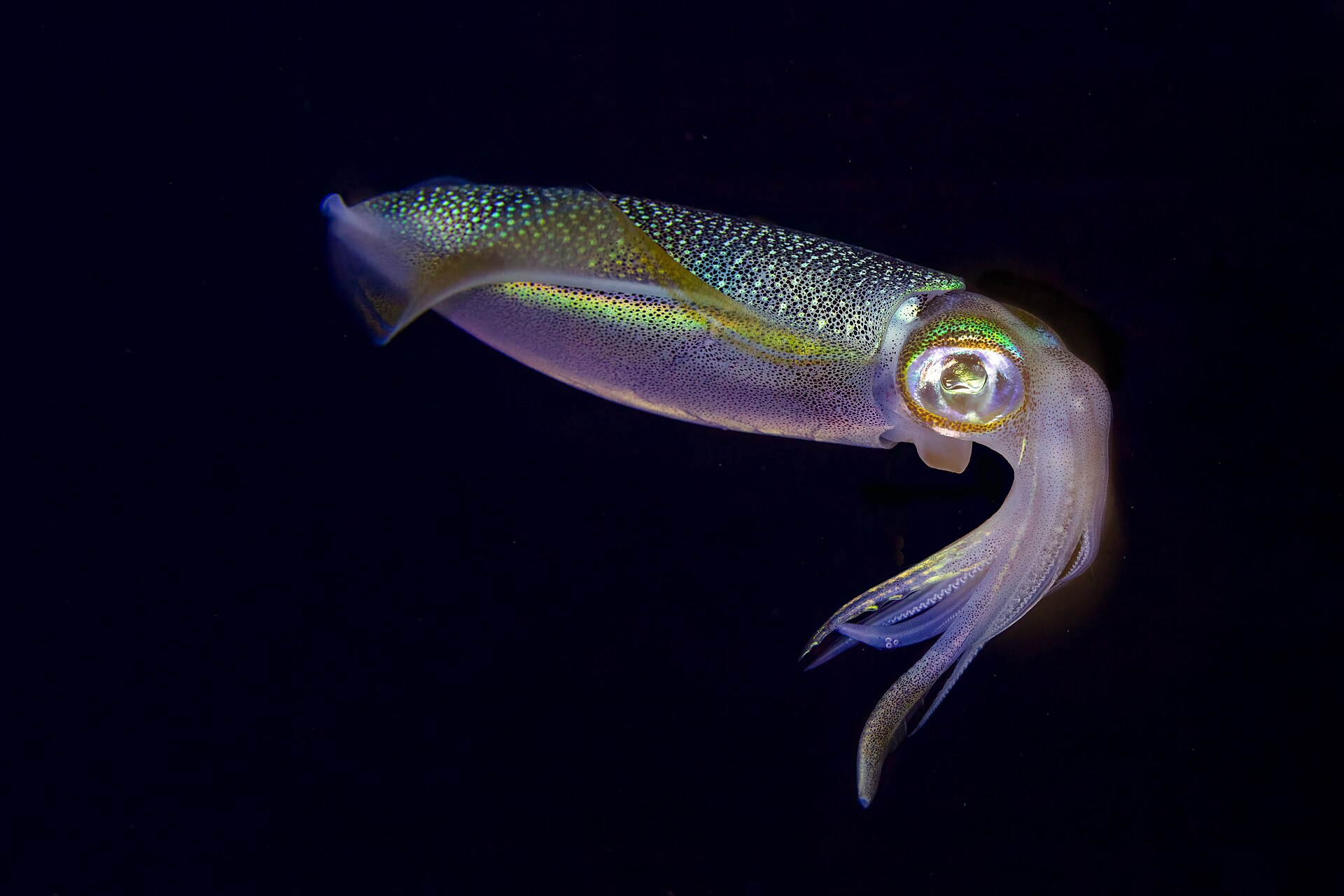
Scientists also investigated the impact of increased acidification on the big-fin reef squid (Sepioteuthis lessoniana), common in coastal tropical Indian and Pacific oceans. They put animals in two different water tanks, one with a pH of 7.8 and one with a pH of 8.2. After 90 days, the scientists removed the animals to examen them.
What they found was that the brains of the squid that had been kept in the more acidic tank were significantly smaller – by 50%. And the greatest reduction was in the regions that control vision. The researchers also did behavioral research and found that the animals showed a reduction in their inclination to seek out prey following their exposure to the more acidic water.
Squid are very intelligent visual hunters, so this result may indicate a bleak future for these creatures if the world doesn’t curb its carbon emissions. Understanding how key predators like these squid respond to acidification is critical for predicting the dynamics of ecosystems.