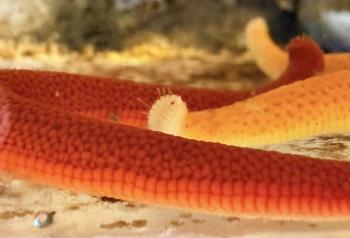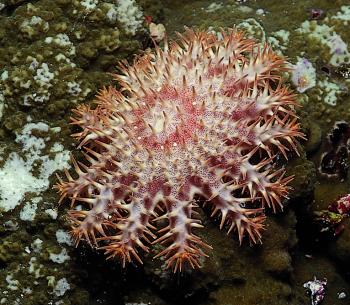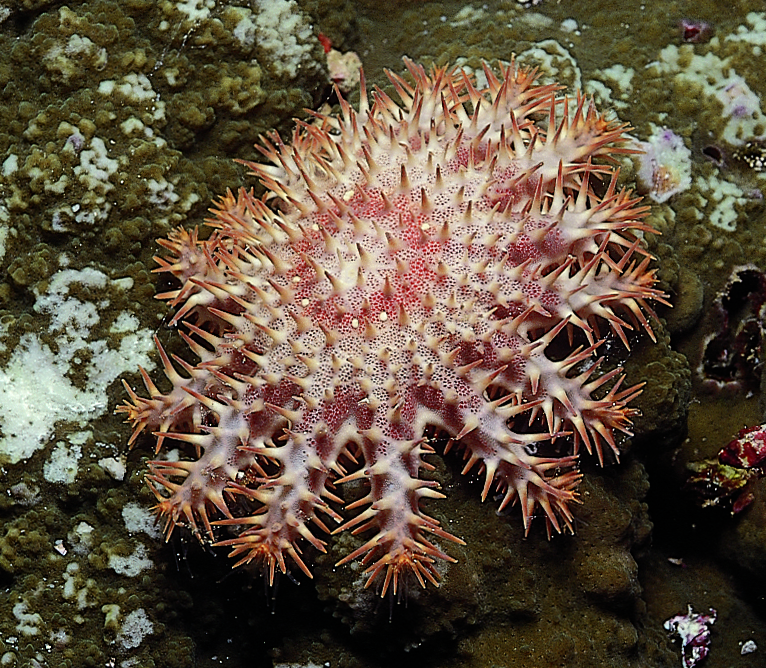
Crown-of-Thorns sea stars (COTS) are large with a wide round body and many arms covered in sharp spines. They can have up to twenty-one arms! These arms are flexible and can curl allowing them to move quickly over rocks and reefs.
Those spines provide formidable defense but they’re not the sea star’s only defense: the spines are venomous, covered in toxins, which can cause great damage to predators. In spite of having a poisonous, slimy defense, there are creatures who can eat the COTS: watch this video of a triton snail preying on one.
On Coral Reefs
Now That’s an Appetite!
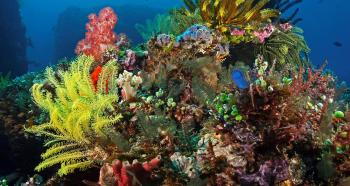
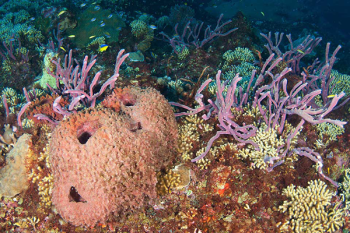
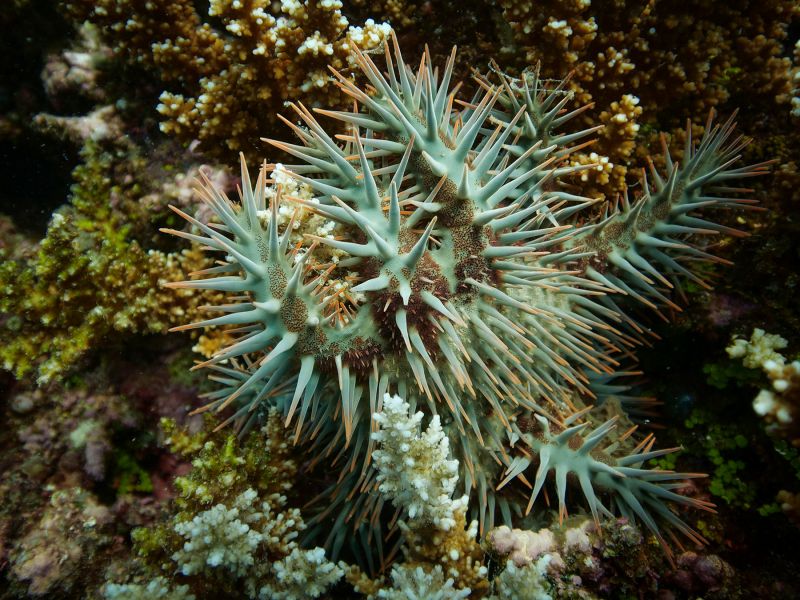
COTS live in the tropical Pacific, Indo-Pacific and Indian Oceans, mainly on coral reefs at depths ranging from 6—12 meters (19—39 feet). They feed exclusively on hard corals, and one adult can consume an area equivalent to half of their dinner-plate-sized bodies every day and up to 10 square meters of coral a year.
A Precarious Balancing Act
When COTS numbers are low, they help maintain the ecosystem balance and the diversity of the coral communities. However, when their predators are low due to overfishing, and nutrients are high due to runoff form land, COTS can increase to the hundreds of thousands, called an outbreak. These outbreaks can devastate coral reefs. When this happens in places like the Great Barrier Reef, the government sends divers to remove COTS.
The Eyes Have It
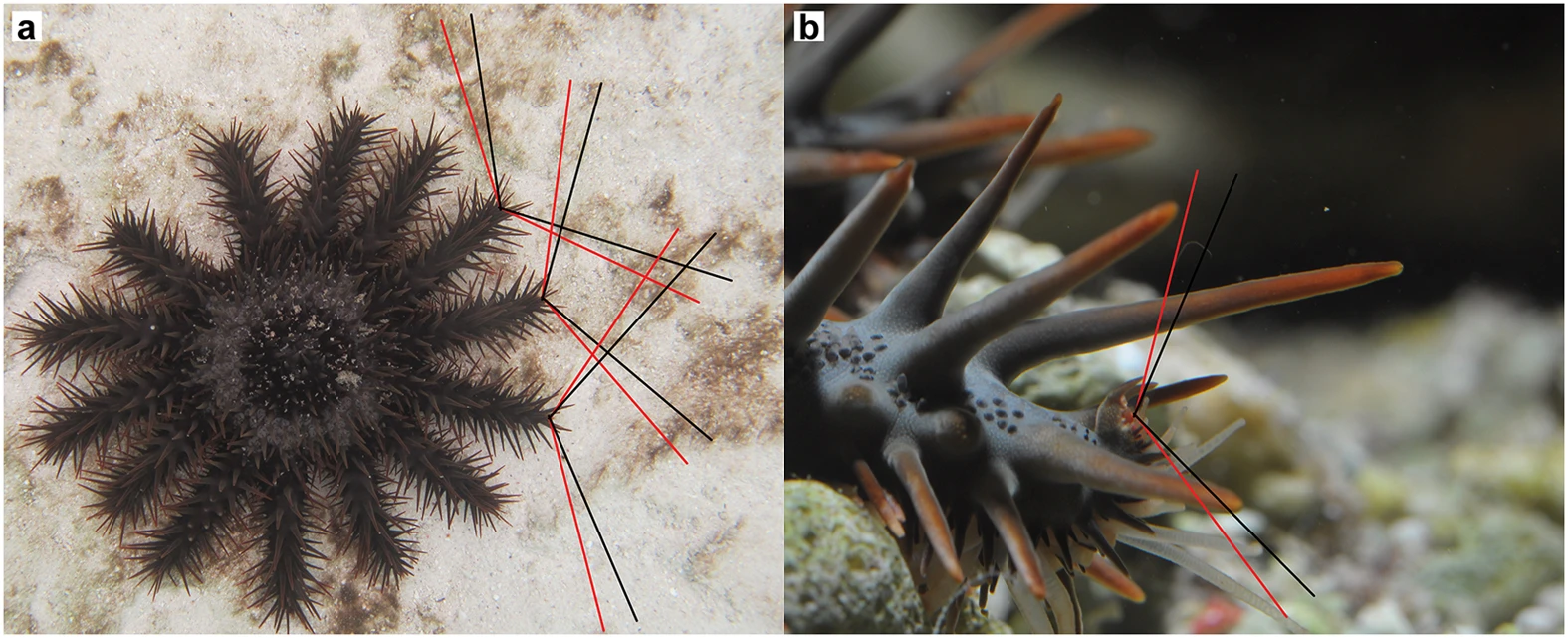
COTS, like other sea stars, use chemoreception to hunt prey. They have simple compound eyes situated on a modified tube foot at the tip of each arm. Each eye has the most ommatidia (clusters of photoreceptor cells) of all the shallow-living sea stars.
Researchers have shown that COTS rely on vison to orient toward coral reefs: experiments show they walk directly toward reef structures. Their eyes are well-adapted for seeing in the shallow coral-reef environment. This implies that these sea stars might use vision to navigate between reef structures and to locate coral prey.
COTS and Climate Change
Warming oceans due to climate change seem to be favorable for COTS. A 2° C increase in sea temperature can increase the probability of their larval survival. And this warming may lengthen the COTS spawning season. Their Increased population adds stress to coral reefs that are already struggling to recover from reoccurring bleaching events.