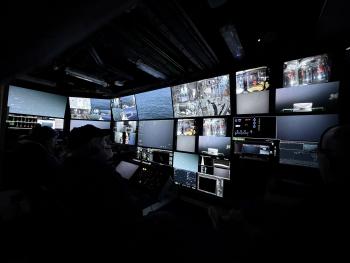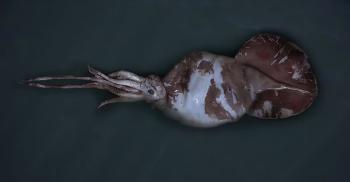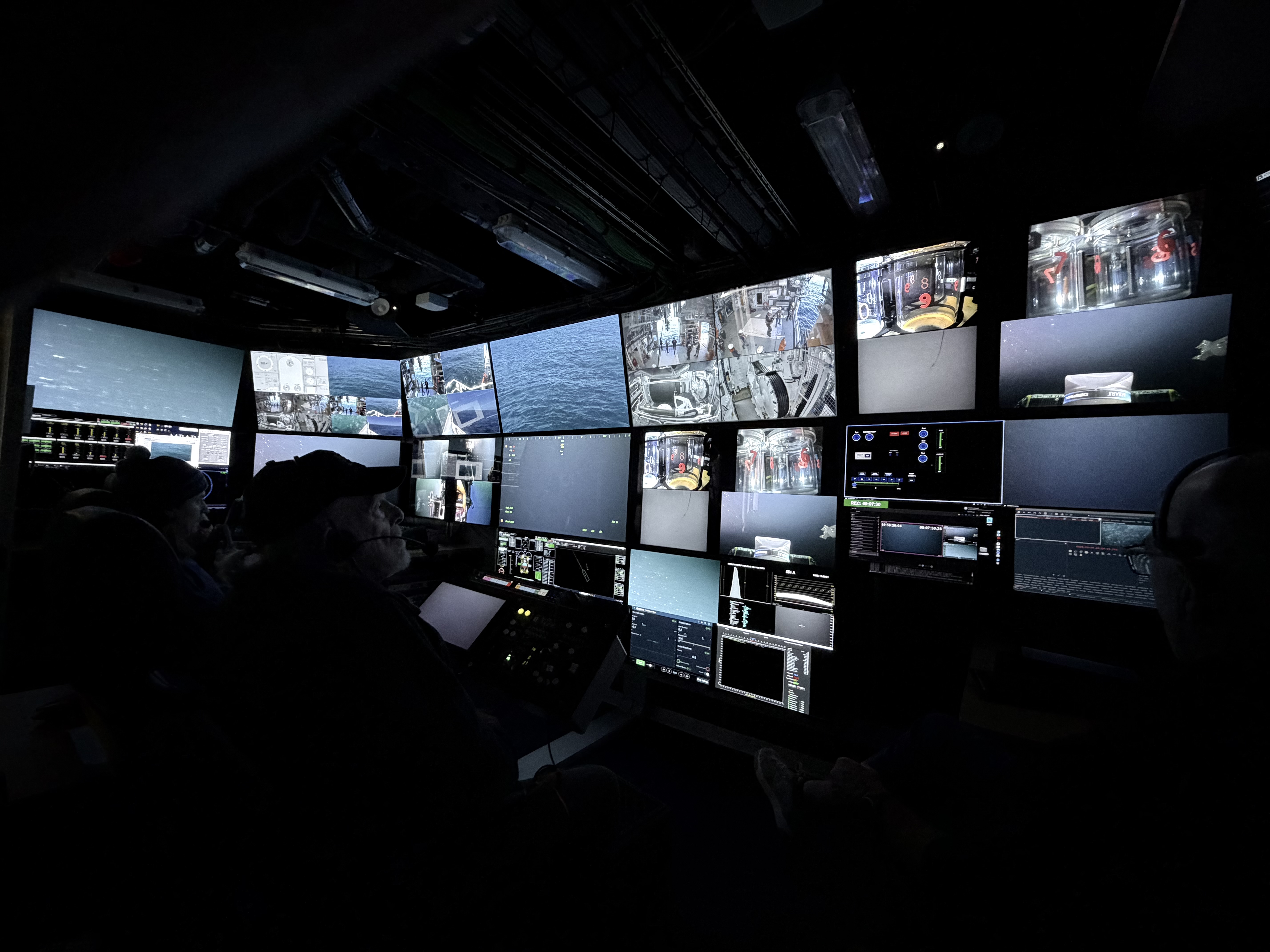
I’ve been sitting for hours in a darkened room with over 20 computer screens. And I love it. I’m watching particles of marine snow falling down the screen until someone says, “stop let’s look at that.” The ROV (Remotely Operated Vehicle) pilot slows down and moves in on the object while the scientist zooms the camera until a beautiful squid appears with those big eyes, a transparent body and arms raised in formation. This is the world of the deep sea—the bathypelagic.
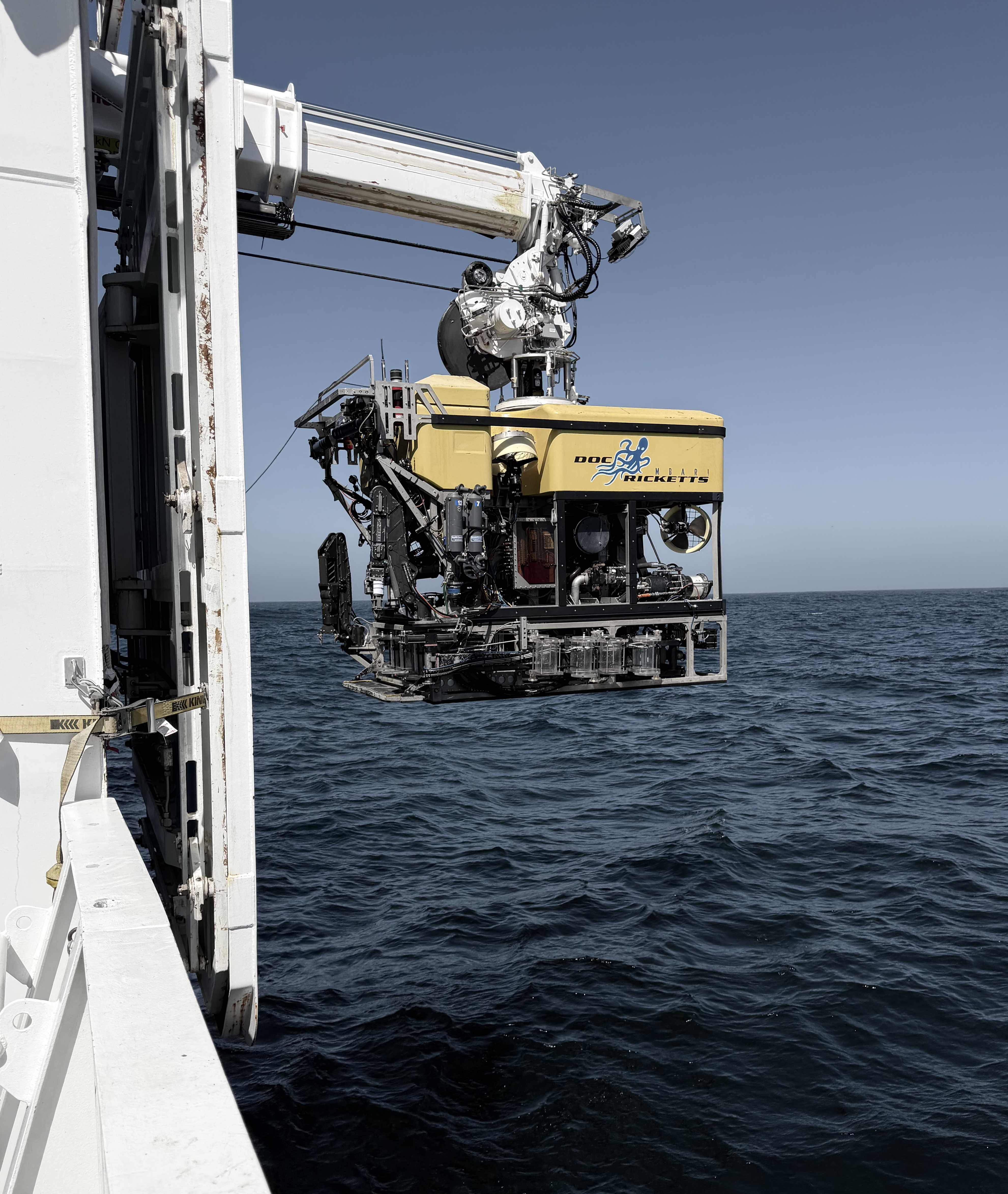
It’s early October, 2026 and I am on the new MBARI (Monterey Bay Aquarium Research Institute) ship for a five-day cruise to explore the bathypelagic zone at the mouth of the Monterey Canyon. A Remotely Operated Vehicle (ROV), is lowered down to one thousand meters (3,000 feet). It is tethered to the ship where we can control it and the camera can send back images. The pilots can also manipulate robotic arms to catch animals by sucking them into individual buckets on the ROV. This maneuver sure takes a skilled pilot. This allows us to bring animals back to the ship so the scientists can observe them closely or even do experiments.
The Cruise’s Mission
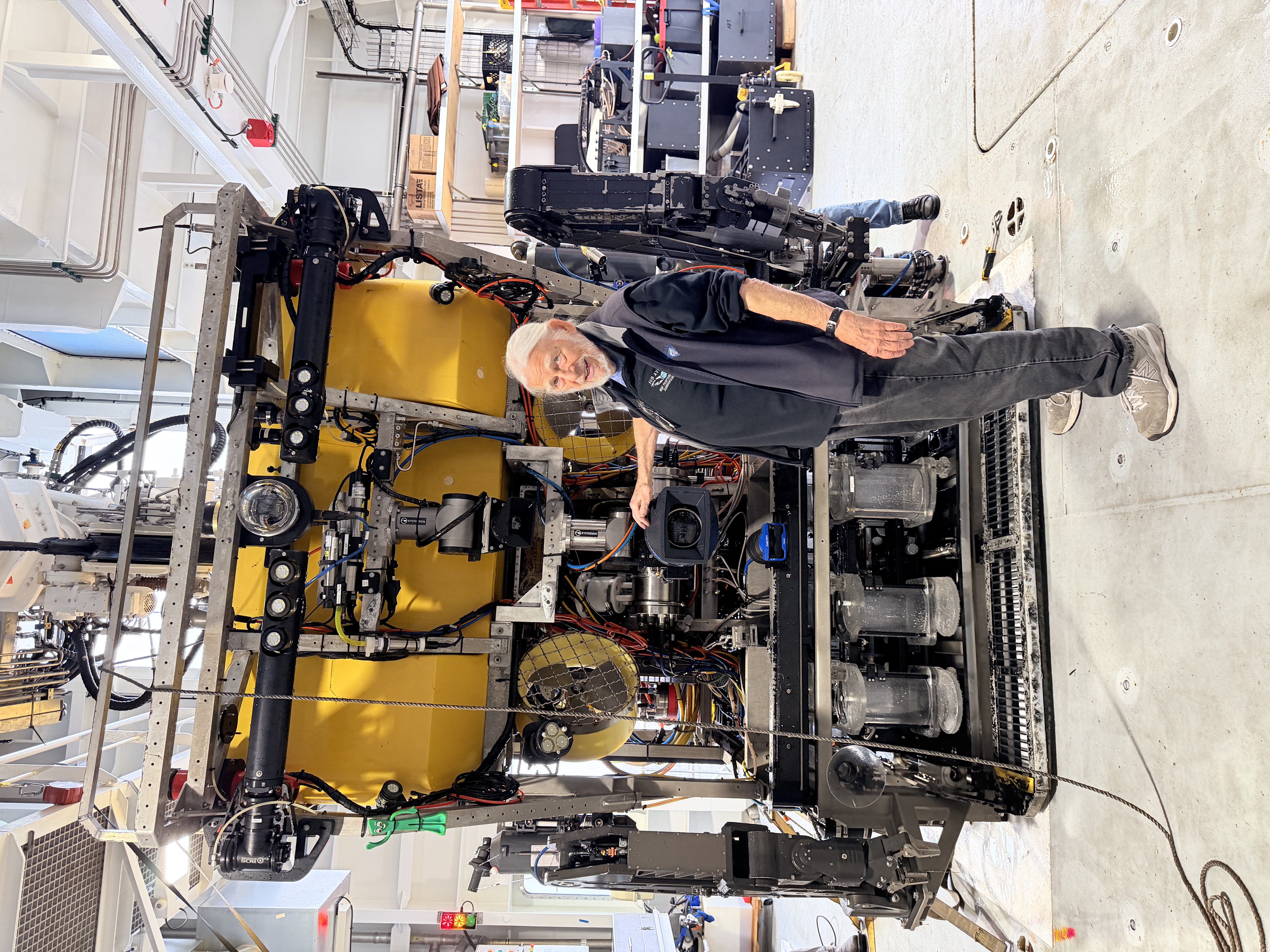
Bruce Robison (otherwise known as Robey) is the Chief Scientist on this cruise and he’s brought along an incredible group of scientists from around the world. Robey has been studying the deep sea for 50 years. On this cruise he wants to repeat a series of bathypelagic transects he did 20 years ago. Is the same community of organisms living there, the same species of salps, squid, jellies, shrimp, amphipods, copepods, fish, and ctenophores? So many beautiful animals all living in a cold, dark environment so foreign to us terrestrials. How do they communicate, who do they eat?
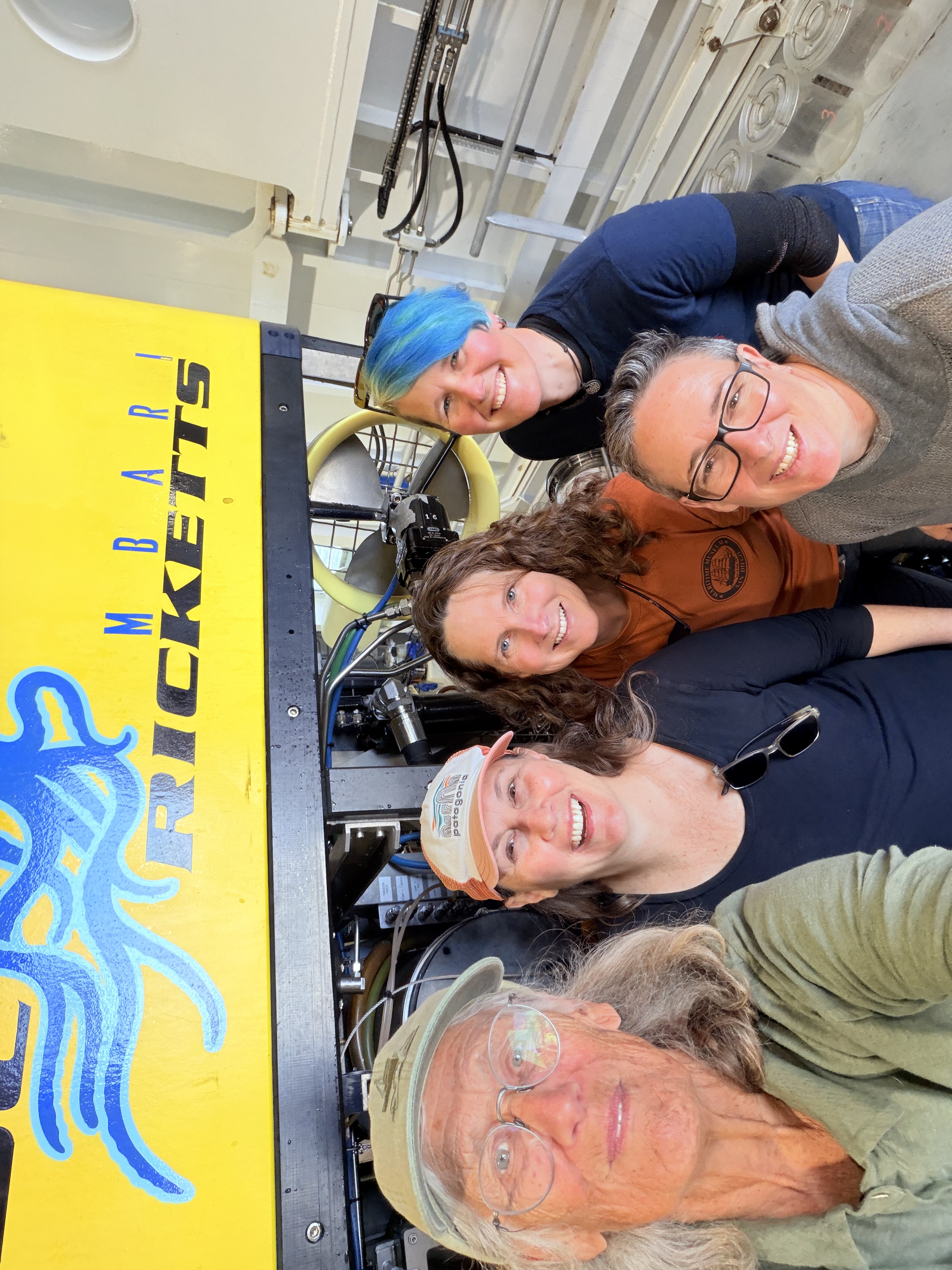
Kim is studying how much oxygen a shrimp uses to stay alive. Jan and Lachshmi want to know how well the large weird eyes of amphipods can see. Karen is photographing animals with a special camera setup. Rob is taking samples of water at depth for environmental DNA analysis. Kat has her own special apparatus that she deploys to lure animals to her camera. She is mostly interested in squid. Kris is in charge of all the video that’s taken by the ROV. Debbie is helping everyone else. And I am just having fun trying to remember who the animals are and which phylum they belong to. There is so much convergent evolution that it is sometimes hard to figure out, especially the annelids and snails.
Lifestyles of Creatures in the Deep Sea
Of course, I love to see how a body plan of a snail or worm that I am used to seeing on land has adapted to living suspended in dark cold water, never seeing or feeling a hard surface, always swimming. How do they catch food or find a mate in such a huge living space?
There is always that rain of particles called ‘marine snow.’ During most of our dives there was a lot of marine snow. Lots of animals have devised ways to catch it in nets of mucus or with long sticky tentacles. There’s a lot of energy left in those remnants of life from the surface. It’s just like spiders on land catching insects flying through the air.
My Observations
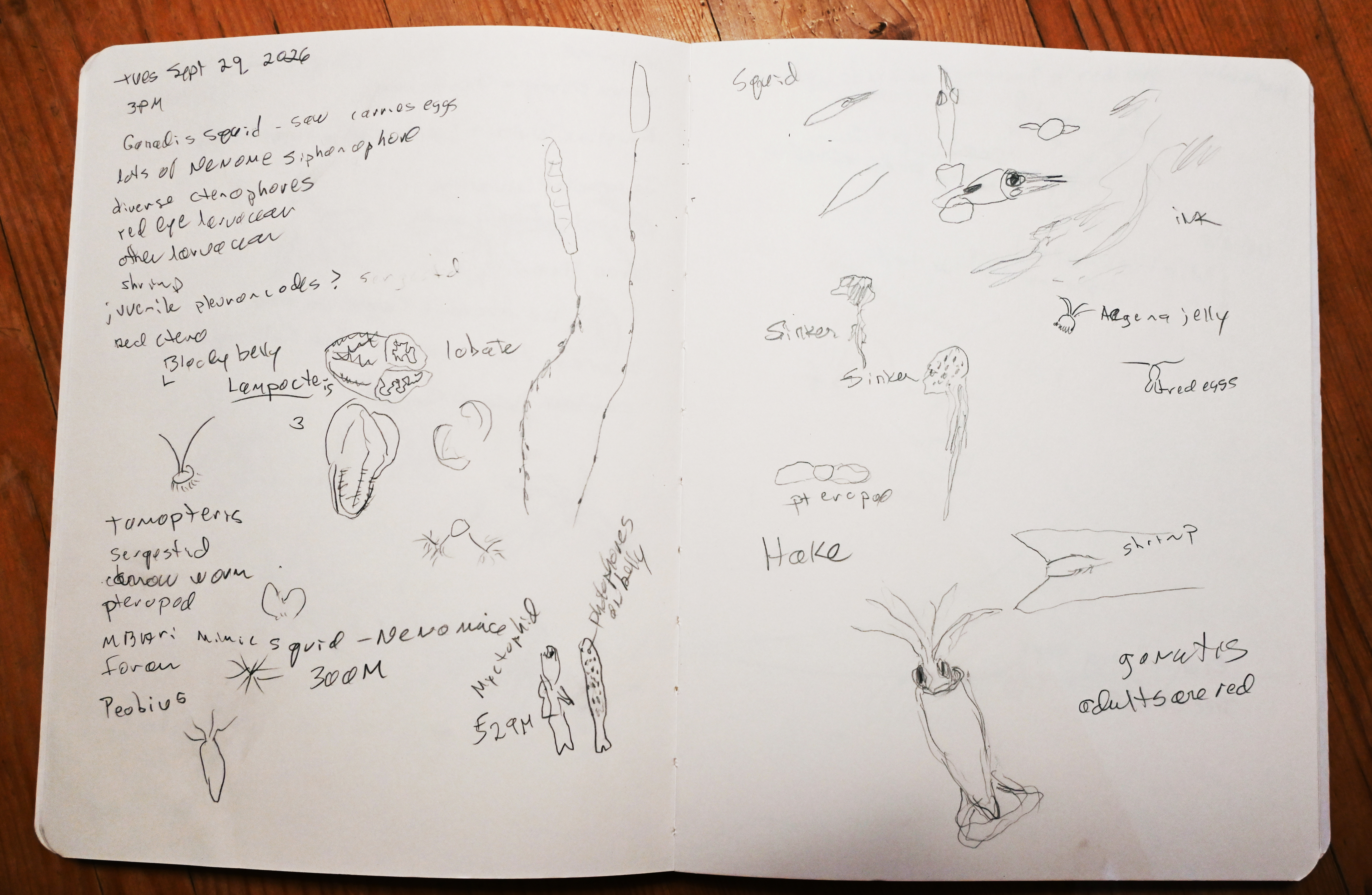
Whenever the ROV was at depth (200 to 1000M), I was in the control room watching. I didn’t want to miss out on anything. I decided the best way to record when I was seeing, was to write and draw pictures in a journal. It wasn’t easy because I am not a natural artist and the animals were constantly moving.
At the Controls
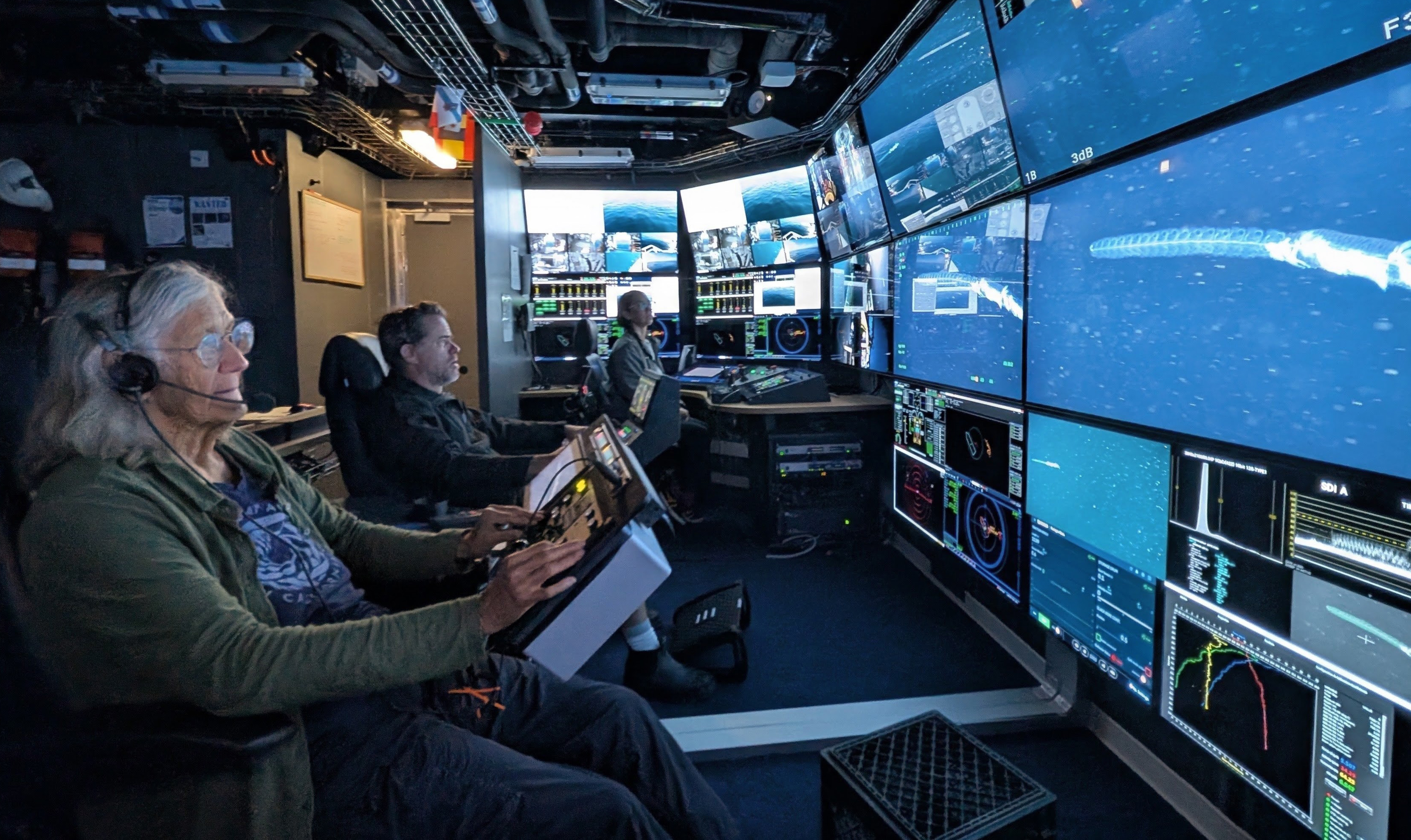
I got a chance to work the ROV’s camera. It’s rather difficult but really fun. Working with the pilot, together we can control how close the camera can zoom in on an animal. It’s difficult with the animals moving, the ROV trying to follow the animal and the camera zooming. But the camera takes amazingly high-definition video and still photos. The pilots are very good at tracking an animal swimming away. I had especially good fun zooming in on a very long siphonophore.
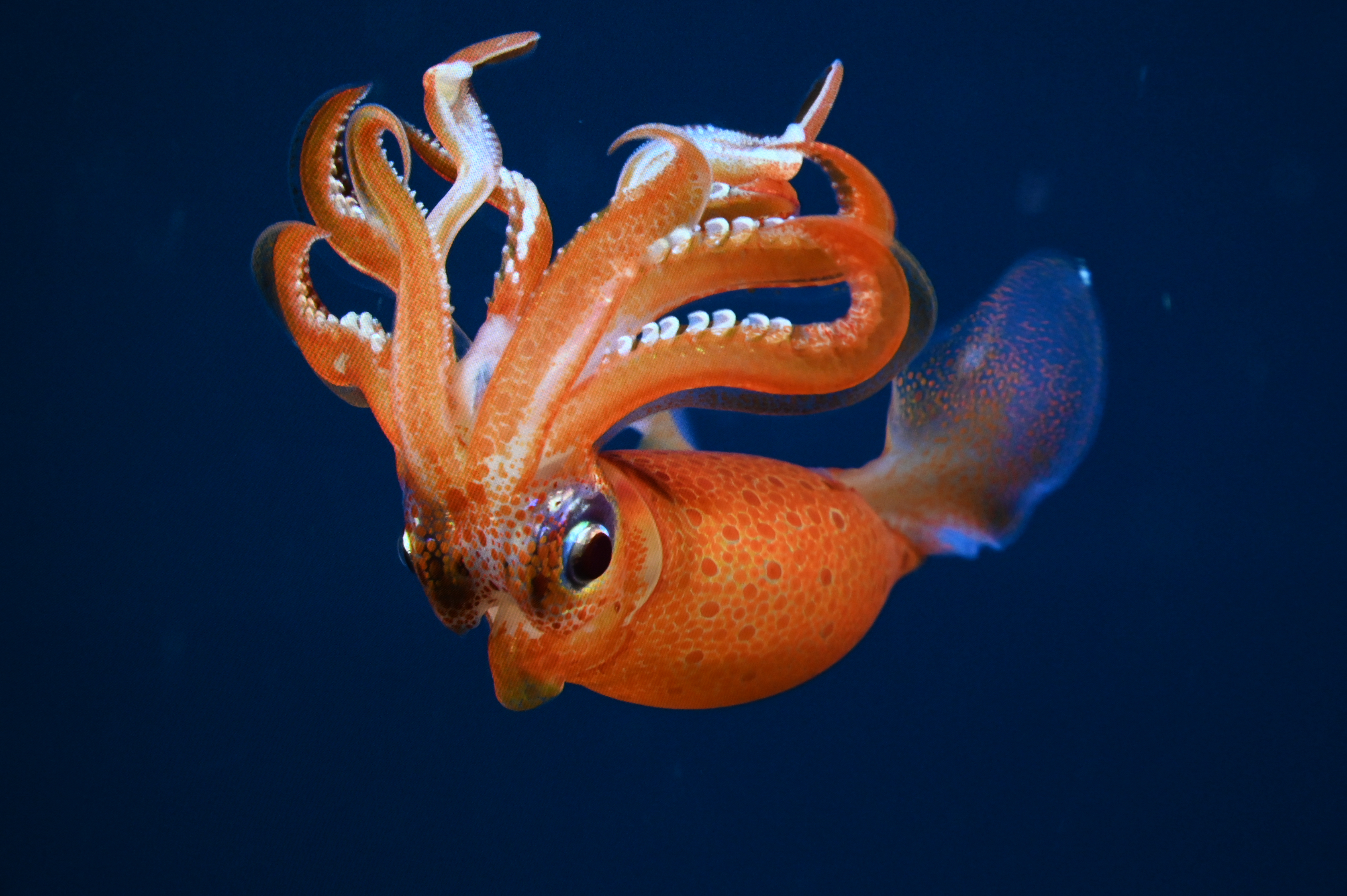
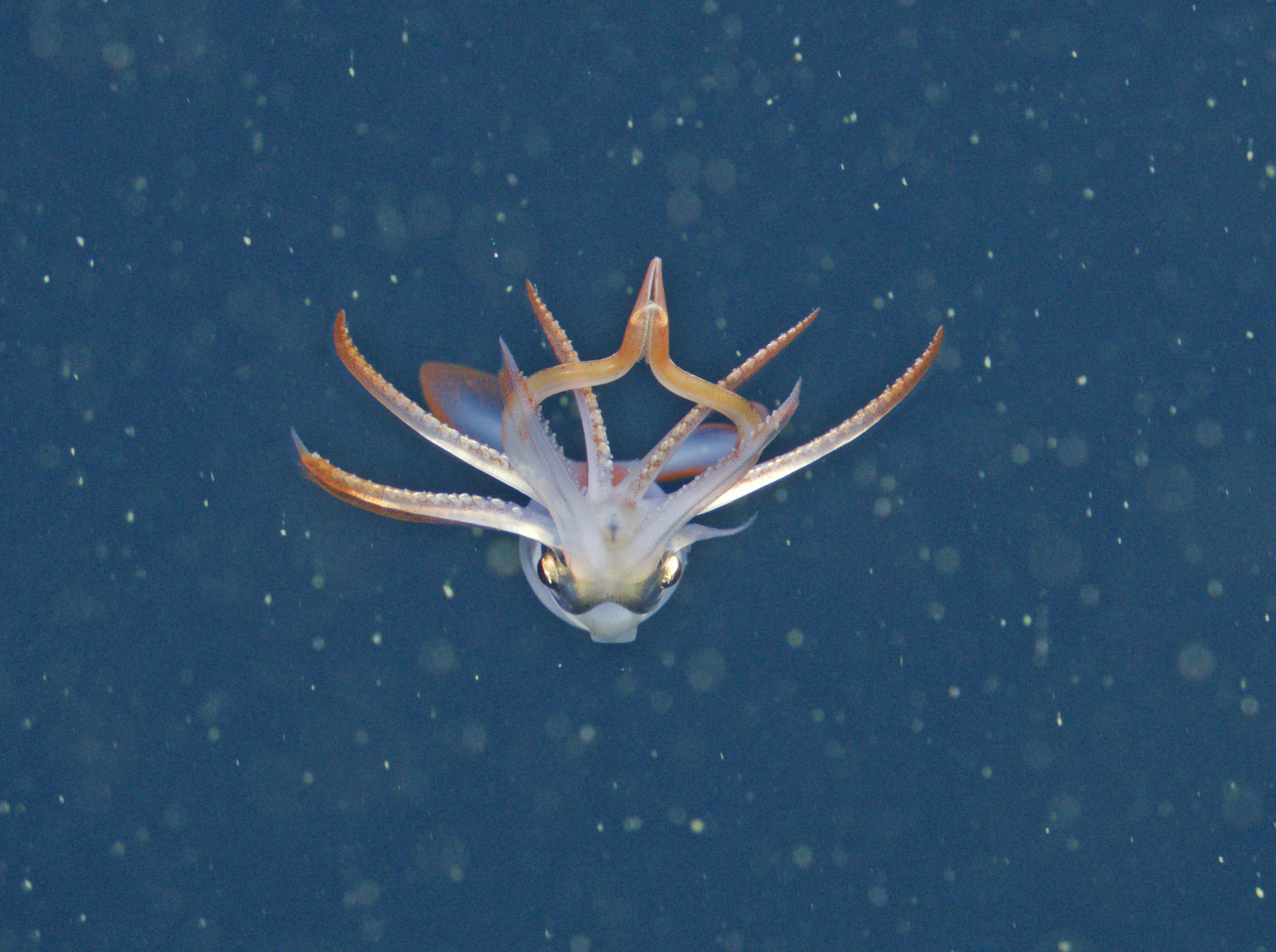
Because Kat was interested in squid, we zoomed in on every squid we found. I was even able to take decent photos of the ship’s video screen with my iPhone.
Trawling for Animals
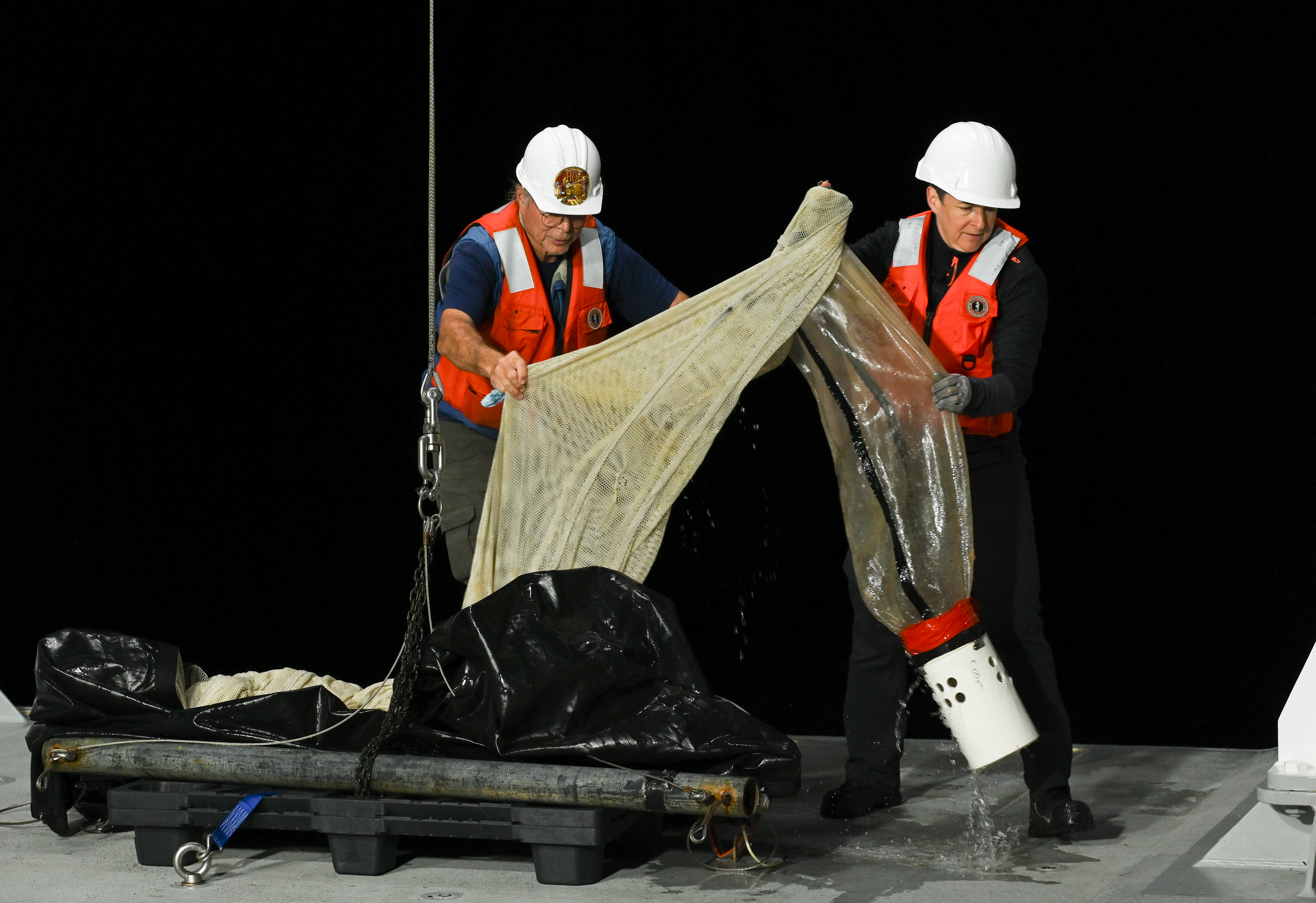
I think this cruise is special because we get to see bathypelagic animals in situ through the lens of the ROV’s camera, and also by collecting animals the old -fashioned way by pulling a huge net through the water behind the ship. At the end of the trawl there is a container where the animals are collected. This way we get to see the real animals, though they are not always in great shape, having been squished in a net along with thousands of others. But many are more or less intact and healthy enough for us to learn from. We do this trawling every night after the ROV dives.
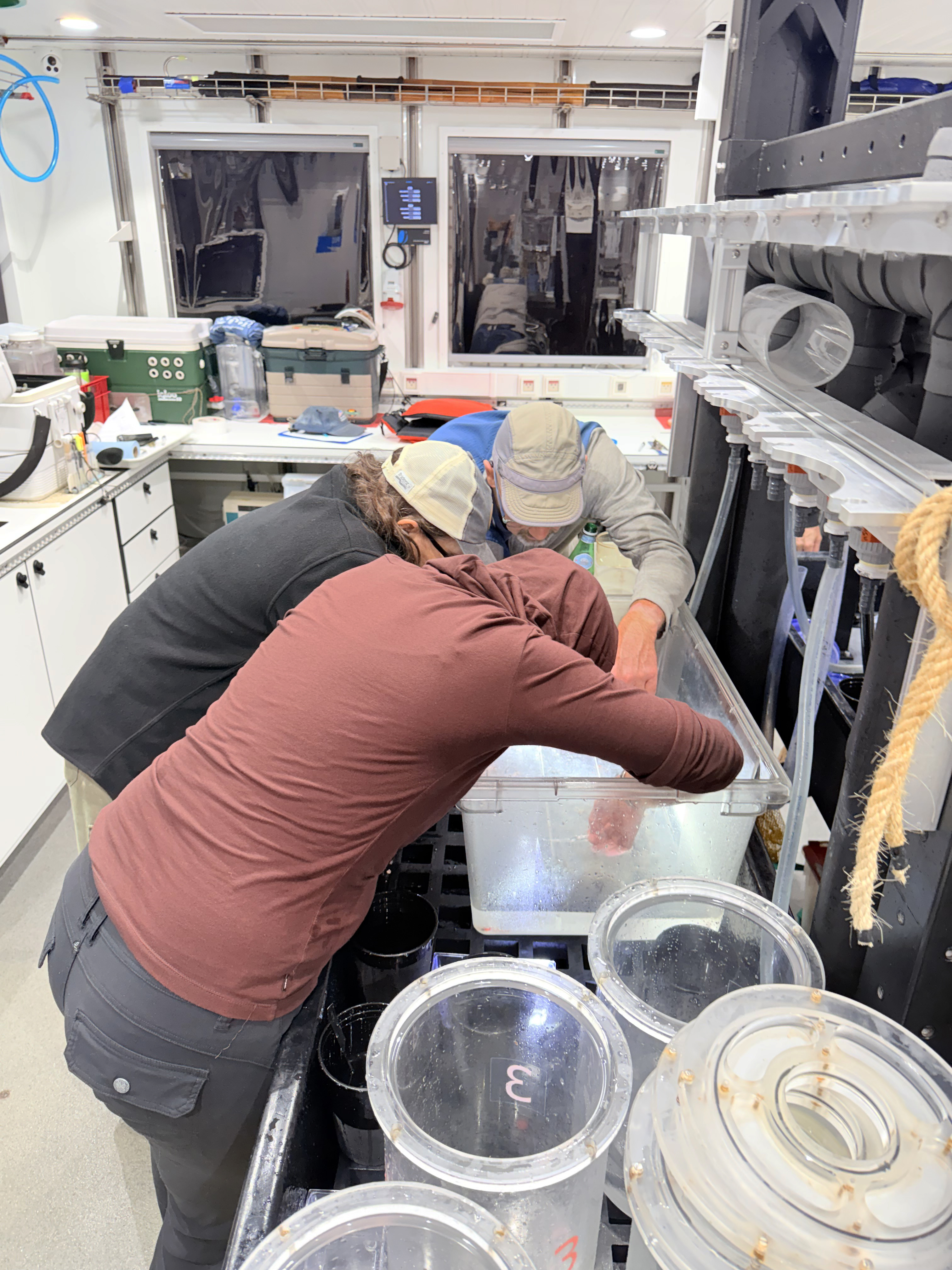
My Photos
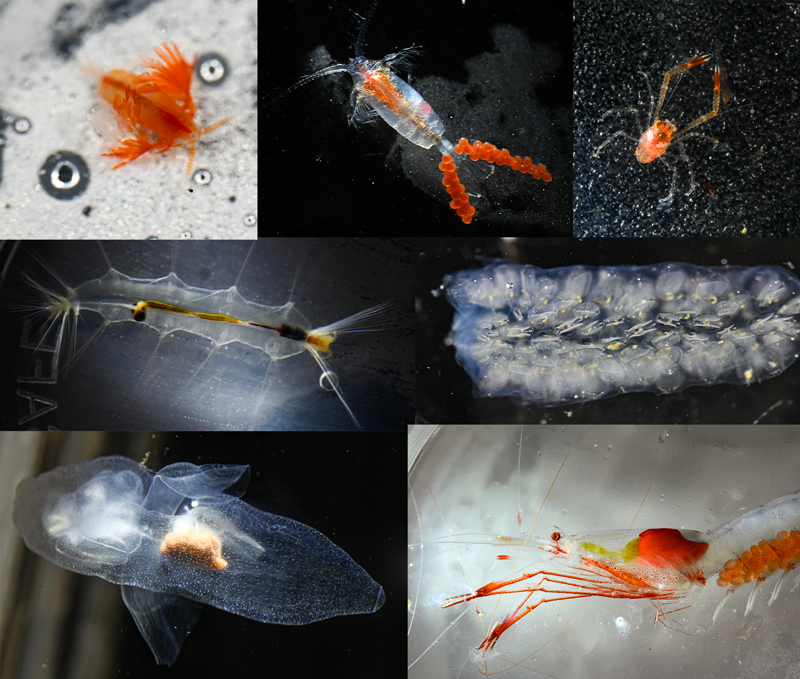
Luckily, I brought along my camera and a good lens so I could take photos of the incredible animals from the trawl.
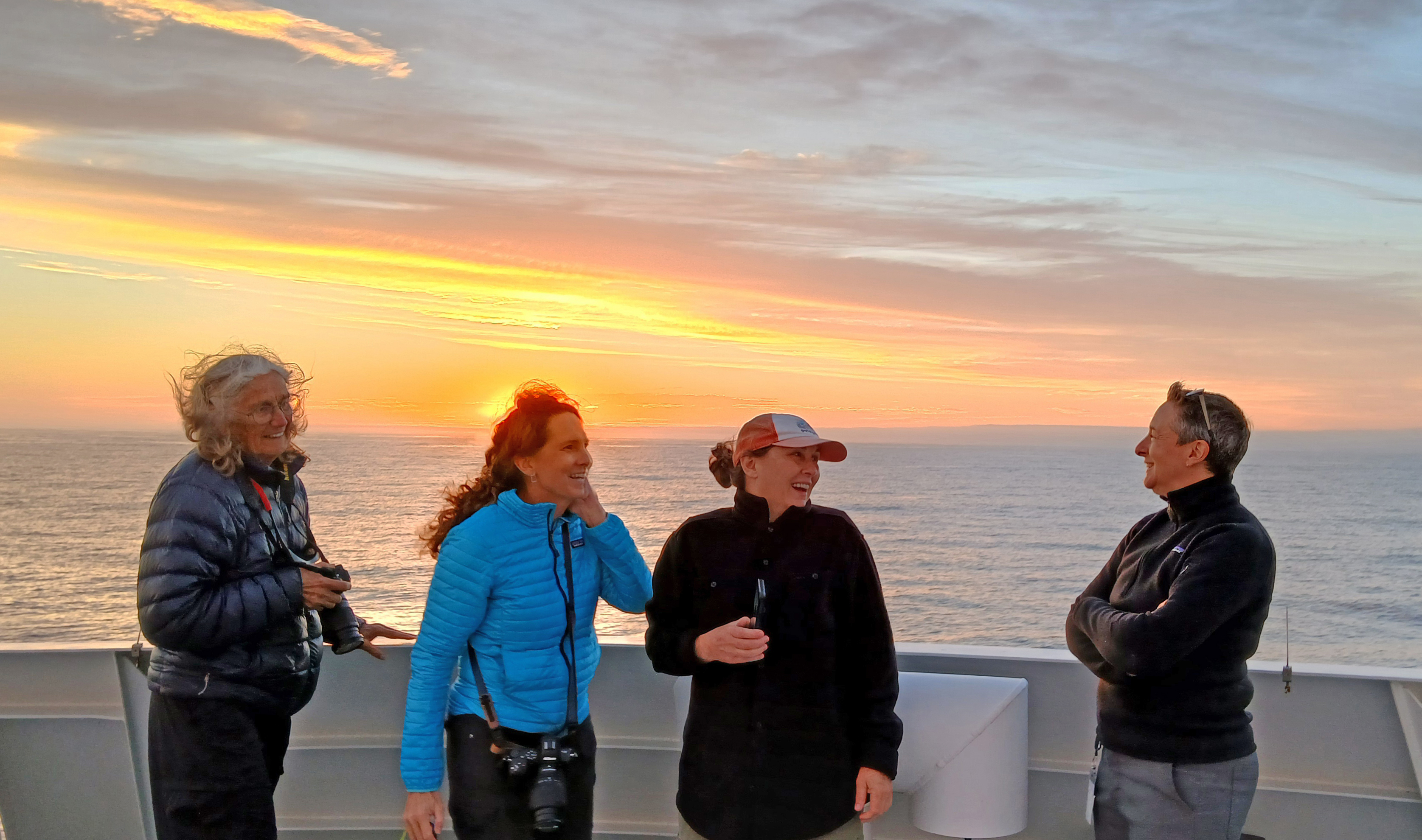
Every trip ends with a sunset.